Showing posts with label empathy. Show all posts

Monday, April 13, 2026

Platero And I by Juan Ramon Jimenez


   Those of us who experience the depth of the emotional connection with a non-human animal will understand the significance of Platero and I.

     Juan Ramon Jimenez’s poetical prose is about the shared experiences between the author and Platero. Platero is a donkey; Juan Ramon Jimenez reveals the soul of his humble donkey friend with tenderness, giving way to a poignant emotional connection with the reader.

     Juan Ramon Jimenez’s Platero and I is a memorable tribute to Platero, his inseparable companion, as they share moments of contemplation, joy, sadness and reflections. Their encounters with animals, people and the beauty of their natural surroundings in the small town of Moguer in Andalusia, Spain, fill the reader with wonder.

   “He is so much like me, so different from the others that I have come now to believe we dream the same… his dreams mine… and my dreams his.”

   The mutual understanding between Platero and Juan Ramon creates a sense of comfort.

   “We understand each other. I let him go wherever he wishes and always he takes me where it is I wish to go.”

   The narrative warms the heart and transports the readers to a sanctuary of serenity where everything turns into a metaphor or an expression of beauty. The author invites the reader to see everything through the eyes of a poet.

  The presence of Platero in Juan Ramon Jimenez’s life clearly connects him to his surroundings and people in meaningful ways. The author also appears to relish their shared solitude, which appears to provide Juan Ramon with opportunities to paint and read. Every instant seems to be pregnant with intrigue and fascination.

  This is the kind of book that touches you so deeply, it can move you to tears. It swathes you in a blanket of gratitude for the simple moments of life, the immaterial treasures that make life meaningful.

  The souls of Platero and Juan Ramon coalesce in the magical sweetness of nature. The freshness of the morning breath, the brightness of the moon, the colors of the sunset adopt a new dimension of reality. They become unique moments of elation and healing.  


  Juan Ramon Jimenez’s bond with Platero is so precious and intimate that he does not even perceive Platero as a donkey but as a person.

  “He is tender and loving like a young boy, a small girl, a child… but inside he is strong, he is dry like a rock, like the land he walks.”


   Platero’s gentle spirit permeates the poet’s way of looking at everything; their connection feels eternal, like the seasons and cycles in nature. It transcends the limited scope of their individual lives. Their kindness expresses itself in their interactions with animals, people and landscapes. Even though brief unpleasant situations take us by surprise in the story, the empathetic voice of the poet never fails to bring us back to the gentle, patient attitude of Platero and Juan Ramon to restore a sense of hope, immersing ourselves once again in a moment of balance and peacefulness despite the abrupt despair, grief or the appalling cruelty of others…


     Juan Ramon Jimenez was a poet, editor and critic who won the Nobel Prize for Literature in 1956. He was born on December 23, 1881 in Moguer, Andalusia, where he wrote Platero and I. He started writing when he was a child. His most famous masterpiece, Platero and I was published in 1914; a longer version of it was later published in 1917.

    You can learn more about his life by visiting the website of the Poetry Foundation:

 https://www.poetryfoundation.org/poets/juan-ramon-jimaenez


 To visit some of the places in his poetical prose, enjoy this video:

https://www.youtube.com/watch?v=bZR0MNJ4Uuc


Here's a video about his biography and poetic work:

https://www.youtube.com/watch?v=LHgXcxmH6mM


 I recommend the full version of the book. The photo of the book cover in this post showcases an old complete edition in Spanish that I possess. It contains the most delightful drawings. I am lucky to have it…

  To satisfy my curiosity I borrowed an English translation of the book from the library. Unfortunately, many parts have been cut off from the translation. Make sure you find the complete version of this delicate memorable book, whether you read it in English or Spanish. Platero and I has been translated into more than fifty languages.


If you enjoyed this post, feel free to read my writing on the following books:


Deer Man by Geoffroy Delorme


Second Nature: the inner lives of animals


Dirty Gourmet: plant power: Food for your Outdoor Adventures

Wednesday, January 1, 2025

The Comfort of Crows by Margaret Renkl


 “What more could anyone ask from a new year than the promise –or just the hope—of renewal?” Margaret Renkl.

  I dare say that hope is not enough. Hope is in desperate need of awareness, reflection and inspiration to make sustainable, empathic choices.

  I was drawn into Margaret Renkl’s world when I learned about her interest in rescueing a sick fox. Margaret Renkl lives in Nashville, Tennessee, where she has formed a close bond with the wildlife on her backyard by observing her surroundings.

  The sick fox was probably suffering from mange. Margaret explains that mange is common in suburban foxes because the “manicured” gardens deprive foxes of the sources of food they need to survive. Under normal, healthy conditions foxes’ immune systems may be able to fight off the mites that cause mange, but suburban foxes suffer the consequences of the use of poisons that people use in their gardens. “Manicured” lawns use different poisons, and Margaret Renkl elucidates it in simple terms:

 “Homeowners set out poisons that keep seeds of weeds from germinating. Then they spray a different poison that kills any plants that germinate anyway. Still another poison kills the insects that eat the “desirable” plants. Yet another kills the field mice trying to survive in a place without fields.

“And those poisons end up in the air and the water. They end up in our bodies, linked to asthma, Alzheimer’s disease, Parkinson’s disease, autism, and several cancers.” She is distraught to watch the consequences of bluebirds ingesting poisoned insects, and Cooper’s hawks eating those bluebirds.

  I am thankful for this book, for it conveys the information that can make a difference in our communities.

  Over the years I've tried to communicate her message in several ways to different people, but to no avail. I witnessed a massive increase in the use of pesticides and herbicides recently.

  I used to relish the visit of various kinds of bees on the wildflowers in my pollinator garden, and I wrote about bees a few times here. Then in the year 2024 I hardly saw any bees in my garden. It was a lonely experience.

  I contacted a professor of entomology from a reputable university. I was sent multiple scientific papers, which validate my concerns and support the content of My Writing life blog. I have used several books at My Writing Life blog: Awareness, reflection, Inspiration to motivate people to do the right thing, but it has not been enough.

   I still come across the fake “pollinator gardens” with pesticides on the lawn. It is necessary to communicate the message with clarity: a pollinator garden with pesticides on its lawn is NOT a pollinator garden. Pesticides take a toll on the health of pollinators, so let people know that by using pesticides on their lawn they are not creating a pollinator garden. They are doing just the opposite.


  What is not to like about the graceful flight of a monarch butterfly visiting our backyards?


  I am thrilled when I come across a toad in the safe haven of our garden. We don’t spray herbicides and pesticides in our yard. In refraining from spraying poisons, we create a little forest of hope in our tiny corner of Mother Earth.

 I could spend hours appreciating the masterpiece of patterns and colors that Mother Nature put together in this toad’s skin…I had never seen a toad like this one before, so I took this photo. Strangely enough, this toad has the smooth skin of a frog. I am enchanted by the beauty and mystery of this amphibian.  


  Did you know that toads can feed on thousands of mosquitoes every summer? Yes, they do eat a variety of insects, and mosquitoes are included in their menu. We don’t have to poison the toads. They are very sensitive to the chemicals humans use in their gardens. We need the toads to do what they are expected to do in maintaining the integrity of the ecosystems where we can all thrive without poisoning our water, air and soil.  


  With climate change getting worse, no repellent will be able to deal with the consequences of the proliferation of mosquitoes. Diseases such as Dengue and West Nile encephalitis, which are transmitted by mosquitoes, are rising steadily.

  Mosquitoes are part of the source of food for toads and spiders, and we need toads and spiders in the web of life, but the use of pesticides and herbicides are destroying their lives, and, in the process, we are suffering the consequences of this lack of judgment. The bats are also in need of protection, and I explained this before here.

  The gist of The Comfort of Crows

 The Comfort of Crows is akin to a personal journal in which Margaret Renkl shares her connection with wildlife and her concerns over what we humans are doing to the environment and to ourselves. There are threads of her personal life interwoven into her narrative, but the charm of her book lies in her observations of wildlife and her response to her setting. In other words, she shares her poetical musings and the practical ways in which she tries to support what remains amid the destruction caused by irrationality, denial and neglect.

  The limitations of her actions did not stop Margaret Renkl from making choices that leave sparks of hope for the reader.  


   She contemplates the wonders of the four seasons, marveling at the lives of the creatures that surround her. She also shares the grief that emerges from watching nature closely. The effects of climate change and the multiple poisons that people use in their “manicured” gardens are evident.

   I think we should start calling them gardens of death or doom instead of using the word “manicured” gardens to refer to the abuse of such chemicals.

    It was also heartbreaking to read about the loss of some of the trees in her own garden, which took place after the happily married couple next to her backyard died. The builders came with their equipment and harmed the roots of her own old trees.

  As you know, the roots of trees do not understand anything about property lines, so the parts of the roots that were harmed in her neighbors’ home killed her trees altogether.

  The thoughtless actions of these builders could be used as a metaphor and a symbol of the lack of awareness and empathy in certain human behaviors.


Trees are not just trees

   Trees provide the oxygen we need to survive. They provide relief from the intense summer heat and protect the soil from erosion. Trees are not just trees, but they are also the organisms that live in them. Furthermore, trees supply the dead leaves that feed the soil, the leaves that form the shelter on the ground to various living beings belonging to complex ecosystems that support our own life on earth, and all these creatures play necessary roles in the precious web of life. You may not see them, but they are there and they need those dead leaves on the ground.  


  Using mathematics to spark awareness

   You will encounter people who don’t understand that destroying the environment is bad for the economy. I come across them often. We are responsible for helping them understand that supporting the health of ecosystems makes our economies stronger, and we have to make clear that destroying ecosystems is shattering economies across the world. To do so, we can use the power of mathematics. I can give a few examples here:

   A single bat can eat 3,000 insects in one night. Bats contribute one million dollars a year to Thailand’s economy by helping to reduce the loss of rice crops. In the United States of America, bats save three billion dollars every year by protecting corn and cotton crops. In addition to being pollinators, bats’ droppings are effective fertilizers. Poisoning their sources of food is a very bad idea.

  More than 80 percent of the leading 115 major crop species worldwide depend on or partially benefit from floral visitation by animal pollinators. Pollination by animals contribute to an estimated 35 percent of global total crop production. Globally, the animal value of insect pollination of plants was estimated to be around 190.5 billion U.S. dollars.

  In addition to addressing the massive use of pesticides and herbicides, we have to acknowledge and tackle the climate crisis. Climate change will continue to increase the price of food. In 2023 extreme weather events such as heat waves, droughts and floods were the main disruptors of food prices, even though the mainstream media has failed to report this critical issue consistently. These events caused widespread damage to crops and livestock globally.

 Rice, for example, cannot get efficiently self-pollinated in hotter temperatures. Extreme heat degrades the grain quality and reduces its yield.

 Severe weather patterns degrade the quality of our produce. Heat waves scorch fruits and vegetables. Furthermore, an excess of carbon dioxide in the atmosphere affects the micronutrient content of produce.  The elevated levels of carbon dioxide led to a decrease in the root uptake of nutrients by the plants according to research. A decline in the content of minerals in the plants, such as zinc, potassium, nitrogen, calcium, magnesium, phosphorus, iron and copper due to high levels of carbon dioxide in the atmosphere has been well documented.

 Severe weather events are expensive reasons for crop loss: for example, 118.7 billion dollars in 2021-2022 were lost in crops value.

  In the year 2024, 500 billion dollars were lost in damages in the United States of America due to extreme weather events according to a report by AccuWeather. To understand how disaster events are on the rise, it may be helpful to check the graph from this link of Yale Connections:

https://yaleclimateconnections.org/2024/01/u-s-billion-dollar-weather-disasters-set-an-all-time-record-in-2023-with-28/


 The artworks in this post and my final message

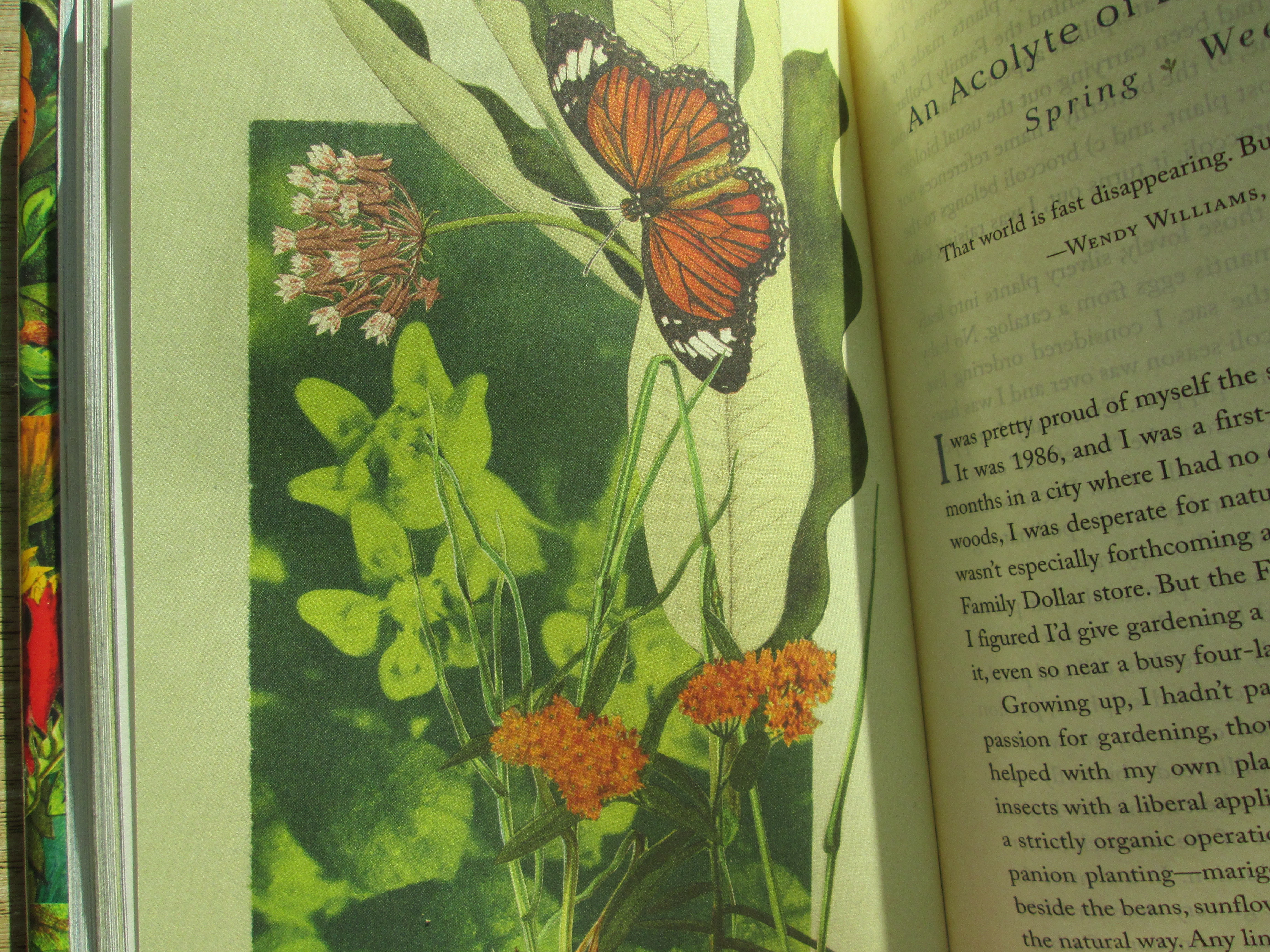
   I have shared some of the delightful artworks included in the book. The artist who created the masterpieces is Billy Renkl, Margaret’s brother.

   I will close this post with a quote by Margaret Renkl, because it summarizes what she tries to communicate in The Comfort of Crows:

     “I rejoice in what is eternal, even as I force myself to face what is not, to let my heart be broken again and again and again. The very least I owe my wild neighbors is a willingness to witness their struggle, to compensate for their losses in every way I can, and to speak on their behalf about all the ways I can’t.”

Here’s a video about the differences between toads and frogs and how you can protect them:

https://www.youtube.com/watch?v=IF0EWfbevrM

 I also invite you to learn about Dr. Tyrone Hayes's story:

 https://www.youtube.com/watch?v=hp-Bvp2oOyQ

 Feel free to share this blog post with your friends. Let’s create ripples of hope and positive changes for the New Year.


 Photo of fox is by Scott Walsh. Source: Unsplash.com


    Relevant links:

https://xerces.org/press/new-report-finds-that-bumble-bees-have-undergone-dramatic-declines

https://hsph.harvard.edu/news/pollination-loss-removes-healthy-foods-from-global-diets-increases-chronic-diseases-causing-excess-deaths/

https://yaleclimateconnections.org/2024/03/we-need-to-talk-about-food-prices/

https://pmc.ncbi.nlm.nih.gov/articles/PMC8803495/

 https://www.beyondpesticides.org

https://www.theguardian.com/environment/2024/dec/26/us-farmers-embracing-wildflowers-prairie-strips-erosion-pollinators


If you enjoyed this blog post, feel free to check my writing on the following books:

 Sweet in Tooth and Claw by Kristin Ohlson

What a Bee Knows by Stephen Buchmann

Hurricane Lizards and Plastic Squid by Thor Hanson

Volcanic Adventures in Tonga by Ann Goth

Addendum: after consulting an expert in amphibians, I learned that my photo shows a Gray Treefrog. (I suspected it could be a kind of frog and I was correct). 


Saturday, November 9, 2024

Parable of the Sower by Octavia Butler


  I needed to take a break from reality on the night of November 6, 2024, so right after dinner I immersed myself in Octavia Butler’s book. But life has a way of playing tricks on me. When I reached page 25, I was shocked to read that the main character, Lauren, had written a journal entry dated on Wednesday November 6, 2024. Yes, you’ve read that correctly. It was the same day of the week, date and year. I had trouble believing the coincidence of such a synchronicity.

  According to the journal entry, Mr. Donner had won the presidential election and he would dismantle environmental regulations and worker protection laws…

   I can’t believe I am writing this but… dystopias are not meant to be used as playbooks. They can be offered to relay the fruits of the author’s foresight to people who are confused and can’t evaluate the consequences of foolish actions and decisions.

  A dystopia takes us to a place where we do not want to go. Parable of the Sower dares to do that.

  What happens when people choose vulgarity and hatred over empathy and common sense?

  What happens when a climate crisis is blatantly ignored and not addressed?

  What happens when the truth does not matter anymore?

  To know the answers to these questions, you can read Parable of the Sower. Octavia Butler delves into the context well. It is like going back to the Middle Ages, but with a climate crisis on top of it. It is unsettling and disturbing. Read it and pass it on to those who still believe in the power of books. It is a story of survival amid dark life circumstances. It is riveting, fascinating and very unpleasant. I am still reading it…

  I can’t believe she published this book in 1993. Octavia Butler was a genius. I can’t figure out why this book is not as widely read as Farenheit 451. Perhaps it is because the author is a woman of color and not a white man.

 The setting is so vivid and terrifying: you can see with clarity how far misogyny, hatred and racism can go; in this reality, people do not even have the privilege of whining about high gasoline prices anymore, because they don’t have enough clean water to drink and keep themselves clean.

  Octavia Butler won several awards, and you can read about her life and accomplishments here:

https://www.womenshistory.org/education-resources/biographies/octavia-estelle-butler

 https://grist.org/culture/octavia-butlers-1993-parable-of-the-sower-predicted-climate-reality/


   I will end the post with the starting quote of her book:

“Prodigy is, at its essence, adaptability and persistent, positive obsession. Without persistence, what remains is an enthusiasm of the moment. Without adaptability, what remains may be channeled into destructive fanaticism. Without positive obsession, there is nothing at all.”


  Addendum to the post:

 I finally completed the read. It is a remarkable story that belongs to the speculative fiction genre. This novel provides the fertile soil to have fruitful discussions on several topics and issues that assail our modern societies. If you belong to a book club, I hope you will consider sharing it. I will continue thinking about it and reflecting on it. 

 It is interesting to point out that when the novel was first released in 1993, critics refused to accept it as speculative fiction. They believed it was a book of science fiction.

  The novel is now accepted as speculative fiction; it has become a best-seller.


Sunday, August 11, 2024

Babylon's Ark by Lawrence Anthony


   Lawrence Anthony’s inner calling launched his efforts to travel to a war zone to rescue the animals in the city of Baghdad in the year 2003. Those animals were deprived of food and water under temperatures of over 100 degrees Fahrenheit. Baghdad city was under siege; Saddam Hussein had been overthrown.

    Lawrence Anthony, author of The Elephant Whisperer, was determined to help the animals of the Baghdad Zoo, even though he had no clue on how he would proceed to accomplish his goal.

   Lawrence feared the worst, and his concerns were confirmed when he managed to reach the animals. He was able to witness how animals who had nothing to do with the human conflict and had no understanding of the political situation were neglected, attacked and abused in multiple ways. It was disturbing to read about imprisoned animals who had no way of defending themselves while they battled hunger and thirst amid the bombings. People vandalized the zoo. It was sad  to read that some of them even shot the animals for fun.

  Lawrence witnessed their trauma, and he was determined to rescue them. Babylon’s Ark is an engrossing account on how he was able to care for these animals against all odds. Initially, Lawrence Anthony had no connections or formal support from organizations. He was just a man with a clear purpose. Eventually, he was able to inspire others to support his mission and share his goal of saving the animals in Baghdad.

   Saddam Hussein was a brutal dictator whose cruelty to human beings was also directed at the animals. Saddam and his son Uday had neglected, abused and abandoned several wild animals and dogs. They had been involved in the trafficking of wild animals, and Lawrence was able to find and rescue them under the most dangerous circumstances.

   I was in awe to read what he managed to accomplish despite the hopelessness of the situation. I was speechless to learn about the rescue of lions and dogs inside a cage in Uday’s palace. There were two cubs and three adult lions along with two emaciated dogs inside the same cage. Lawrence was shocked because the pride of lions had not devoured the dogs despite the fact that they had all been starving.

 There was no explanation why the starving lions had not already killed and eaten the dogs. We guessed it was because the animals had huddled together through so much terror during the bombing raids that they had bonded in a way only nature could fathom, forging some mystical affinity that transcended the torment of hunger. Indeed, even in their sapped state, the two dogs were nuzzling and cuddling the cubs—testimony that nature is not always red in tooth and claw.”


   Babylon’s Ark is about finding common ground with others to develop solutions that align with kindness and ethical principles. Putting aside their differences, soldiers, conservationists and civilians came together to rescue the wild animals. However, this did not happen by chance. Lawrence had to work hard to convince people and garner their support and approval. I admire the ways in which he interacted with those around him to gain their respect and understanding. His book is an inspiration and a testament to his resilience and courage. His messages deserve to be shared across the world.  

  Lawrence Anthony risked his life to attain his goal. It was an adventure full of roadblocks and hazards, but the unsettling frustrations, setbacks and conflicts he had to contend with did not deter him. Being in a combat zone was not easy, but, thankfully, Lawrence survived the plight and wrote this fascinating book whose narrative will captivate your heart.

  Perhaps his quest for empathy and compassion will not be forgotten, and it may help people to understand that we need to come together to care for our home. Mother Earth needs our cooperation to support the ecosystems that make our life possible on the planet.

  Another important aspect of the book is the fact that it helps us to see how unfair and terrifying it is to live under the abuse of power of a dictator. I think the book plays an important role in explaining the dangers dictators pose to the livelihoods of its citizens.

  Last but not least, Lawrence Anthony’s musings and reflections at the end have the potential to summon people to do what is best for their communities, democracies and the planet. His statements are based on facts. Lawrence’s thoughts are as relevant today as they were when he wrote the book:

 “In our ruthless quest for technology, material wealth and scientific progress, the humanities have been sorely neglected. And, as most of us are almost completely ignorant of the character and function of other forms of life, we abuse the natural world and diminish once robust survival systems without any real understanding of the consequences—especially for our own continued existence. Why do we inflict harm on the only home we have? Most people intrinsically have empathy with nature. Everybody I speak to is against cruelty to animals; everybody wants fresh air, open spaces, unpolluted rivers, and a healthy livable planet. So why do we so dreadfully abuse our sole life-support system?”

 “As living organisms, we are all part of the greater whole, and as such, we are embodied with exactly the same fundamental purpose: to survive. And to do so—as individuals, families, groups, and as a species—we have to live in dynamic collaboration with the plant and animal kingdoms in a healthy, life-sustaining environment.”

  The experience of reading Babylon’s Ark was so immersive that I had vivid dreams at night related to the setting and situations he encountered. Read Babylon’s Ark and share it with others.


Feel free to read my posts on the following books:

What a Bee Knows: Exploring the Thoughts, Memories and Personalities of Bees, by Stephen Buchmann

Unlikely Friendships by Jennifer Holland

Volcanic Adventures in Tonga by Ann Goth

Sweet inTooth and Claw by Kristin Ohlson


 The photo of the lion is by Luke Tanis. Source: unsplash.com


 Here’s a conversation with Lawrence Anthony about his experiences in Baghdad:

https://www.youtube.com/watch?v=46fQBDfYAJo


Friday, March 22, 2024

I am Bunny: How a "Talking" Dog Taught Me Everything I Need to Know About Being Human


“Trust creates peace.” (Anonymous quote).

 Trust is the foundation of every healthy relationship. Relationships with dogs are not the exception to this rule. Genuine friendships with dogs are based on trust and communication.

 Alexis Devine has always been eager to do her best to optimize communication with her adopted dogs. In a delightful friendly style, Alexis shares her personal journey with Bunny, a dog she adopted three years before publishing her book. Alexis’s curiosity, kindness and sense of wonder led her to seek new ways of understanding Bunny. For this reason, she resorted to the use of buttons that her furry friend accepted with enthusiasm; Bunny uses them to express herself. These buttons play recorded words when pressed.

 Alexis Devine’s exploration eventually led her to connect with researchers who study dog behavior, and now she is collaborating with their work. Interestingly, the choice of buttons kindles conversations with her dog, interactions that reveal fascinating insights into Bunny’s thoughts, emotions and feelings. This kind of communication shines a light on the ways Bunny perceives the world around her. If you’ve ever wondered whether dogs have night dreams, you will learn about this topic in her book…


  In addition to the anecdotes and dialogues she shares, there are relevant snippets of Alexis’s life intertwined with Bunny’s experiences. Alexis shares aspects about herself, vulnerabilities and challenges she had to contend with, and a personal adventure of self-discovery, growth and transformation. She also carves out interesting reflections about life in general, inviting the readers to appreciate situations from refreshing perspectives.

 There are a few chapters about research on animal communication interspersed throughout her book. I chose to read these chapters separately because I did not like to be distracted from the story of Alexis and Bunny.

 Alexis Devine is an artist and entrepreneur from Seattle, Washington. She is also part of an ongoing canine cognition research study at the Comparative Cognition Lab at UCSD. “Her goal is to further our understanding of the power of connection and importance of empathy, meeting her dogs where they are and understanding them on their terms to facilitate trust and promote an environment that supports them as the incredible creatures they are.”

 You can learn more about Alexis Devine and her experiences with Bunny by listening to this brief interview:

https://www.youtube.com/watch?v=Id6jvQPzEQo


 There are various photographs of Bunny and Alexis in this book, but they don’t reveal the essence of their unique connection. Most pictures showcase Alexis’s unconventional clothing style and makeup. There is nothing wrong about an artist marketing her art, but we somehow miss out the energy of the bond between Alexis and Bunny in those images. On the other hand, the heartwarming photos of her parents spending time with Bunny truly reveal the spirit of their relationship:


  Books that focus on communication with dogs are of special interest to me. I experience a deep connection with my own furry friends. Words can hardly describe the bond that blooms when we care deeply for them. Every moment with them is a precious gift that I don’t take for granted.

 You can also check my review on Canine Confidential.by Marc Bekoff.


Have fun with these supplementary links!


https://www.goodgoodgood.co/articles/dogs-that-saved-lives


https://www.cnn.com/2024/03/13/health/playing-with-dogs-affects-brain-waves-study-wellness/index.html


https://www.ncbi.nlm.nih.gov/pmc/articles/PMC9534402/


Thursday, August 3, 2023

The Creative Lives of Animals by Carol Gigliotti


  How do non-human animals’ creative processes contribute to the diversity of the planet we share? This question guided Carol Gigliotti through the maze of writing The Creative Lives of Animals. I had this book in my reading list before it won the 2023 Nautilus Book Award in the category of Animals and Nature, so it was a pleasant surprise to learn about this recognition.

  The author examines the scientific research on the multiple ways non-human animals create, blending into her narrative  insights, reflections and memorable personal experiences.

 Based on her detailed work of research, Gigliotti asserts that animals are creative in ways that are similar to humans and decidedly unique.

 Before delving into the examples of creativity in animals, she explores the concept of creativity, acknowledging some of the qualities that make up the mosaic of creativity, such as flexibility, curiosity, intelligence, persistence and comfort with complexity. Her book also reflects on how creativity intersects with empathy, cooperation and morality.

 The creative process engages emotional aspects as well as cognitive ones.

 If you created anything, whether that something is a favorite recipe, a garden plan, or a new app, you know that thoughts about the past, the future, and the feelings of others often arise in the creative process you used to make that dish, plan that garden, or design that new app, and may influence it.”

  Traditional views of creativity used to be restricted to focus on the most celebrated human artists, scientists and innovators, but the concept has expanded to appreciate the creativity of ordinary individuals and the cooperation among groups of people. How can creativity play a role in a community and impact a culture? How does creativity manifest in the world in ways that go beyond the human contribution?

 The creativity of animals exists on the individual, group, species and ecosystem level, and the loss of an individual animal is the loss of that individual’s contribution to those interactions.”

 We are only one species out of millions of species who inhabit the earth. The chapters of the book describe acts of creativity in various species of animals. 

 Over the last five years research has evolved considerably in the field of animal behavior. Non-human animals are no longer viewed as automatons that follow natural instincts but as complex individuals with personalities, intelligence, emotions, and even aesthetic sensitivity.  There is still a lot to be learned about their complexity.

  I made the decision to focus on the creativity of animals not in comparison or in contrast to human creativity but to see both as part of a ‘deep source’ of encompassing creativity.

 One of the most memorable experiences she shares in The Creative Lives of Animals takes us back to a remote mysterious place where the lives of humans are deeply intertwined with those of animals. Respect and knowledge are at the core of their coexistence. Her days there “opened her eyes to animals as members of families and cultures”. Gigliotti stayed with the Kitasoo/Xai’xais in the village of Klemtu on the island of Princess Royal in northern British Columbia, home to the Spirit Bear. There are still no roads there. “The ratio of humans to land is quite low and so, compared to many places on earth, untouched by humans.” The unemployment rate was reduced from eighty percent to ten percent. Money is used to protect the people and the animals, and to sustain their communities. The Coastal Guardian Watchmen protect the wolves, bears, raptors and other animals from trophy hunting.

 Gigliotti spent many hours talking to the people at Klemtu to understand the relationship between the community of indigenous people and the animals who inhabit the tribal lands.

  Animals that are considered “ferocious”, evil” or “hunting trophies” by other human cultures are treated with respect in Klemtu. Doug, a former chief leader, as well as other bandmates are very knowledgeable about bears and other animals in the region, and their curiosity and understanding of bears contribute to a peaceful coexistence.  For example, they understand the bears’ reactions to different colors. They’d researched this by wearing different-colored clothes on different days.

  After an interesting journey by tugboat through glacier-carved fjords, a visitor asked Doug about a case he had been carrying. The visitor was convinced it was a gun. Nothing could be further from the truth. The case contained a camera. Guns would have made things tense; bears and other animals would have treated them with distrust if Doug had been carrying a gun. Those were not needed.

  Perhaps her book will inspire humans to embrace ideas and actions that appreciate and respect the unique lives of animals as contributors to the diversity of the world. This intriguing book will hopefully encourage the newer generations of people to open up in the direction of new paths of cooperation and empathy not only toward non-human animals but also toward each other.

 I am sharing a couple of videos about the region and culture I mentioned in my post: Klemtu.

This one is about bears in Klemtu:

https://www.youtube.com/watch?v=oTD4-FfRf3I

This one is about  how they have addressed unemployment and so much more:

https://www.youtube.com/watch?v=s3JLBcLXnNA


If you enjoyed this post, you may be inclined to read my reviews on the following books:

The Wisdom of Wolves by Jim and Jamie Dutcher.

Sweet inTooth and Claw by Kristin Ohlson.

Friday, March 17, 2023

Machig Labdron and the Foundations of Chod


“To consider adversity as a friend is the instruction of Chod.”

Machig Labdron


 True liberation happens when one is free from the restraints of the ego. If you read Across many Mountains by Yangzom Brauen--a book I wrote about last February--you are somewhat familiar with Machig Labdron’s teachings. The Chod is a spiritual Tibetan practice introduced by a woman a thousand years ago. Her name was Machig Labdron, an eleventh century Tibetan yogini.

 After reading Across Many Mountains I was intrigued to learn more about this aspect of Tibetan culture and Buddhism, so I searched reading material on the subject, and I found “Machig Labdron and the Foundations of Chod” by Jerome Edou. Jerome Edou has been an interpreter for various lamas, and is an author and translator of works on Tibet and Tibetan Buddhism.

 The book chronicles the life story of Machig Labdron, revealing her teachings and wisdom. The writer of this blog post has been a meditation practitioner for many years; the book meets the needs of this practitioner, responding to doubts and concerns and clearing spots of confusion. It helps to integrate various aspects of meditation, transcending the act of meditation itself.

  It is not clear to me whether this book will be appreciated by somebody who has no experience in the practice of meditation. Machig Labdron’s words suggest there is truth in my statement:

 “My Chod instructions consist in the authentic teaching of Mahamudra,

And the Mahamudra cannot be explained by words.”

 Buddhists agree that people tend to be enslaved by what the ego dictates. The   Chod guides the practitioner to let go of the desires of the ego. This liberation enables the mind to find its state of true freedom and clarity.

 If you are just starting to explore this subject, Loving-kindness by Sharon Salzberg may be a good beginning to introduce this topic. Eventually, you may choose Jerome Edou’s book on Machig Labdron and the Foundations of Chod.

It is time for a break. By the end of April I will be back to My Writing Life blog with more book recommendations, both fiction and non-fiction.

Enjoy the ride, wherever it takes you.


Till next time.


Interesting references:

https://dakinitranslations.com/2021/10/13/gender-blindness-patriarchy-denial-and-female-tokenism-in-buddhism/

https://health.ucdavis.edu/blog/cultivating-health/10-health-benefits-of-meditation-and-how-to-focus-on-mindfulness-and-compassion/2022/12


https://www.taramandala.org/teachings/what-is-a-dakini/


 Note: the next post will by published in May. Thank you for your interest in My Writing Life blog.

Friday, January 6, 2023

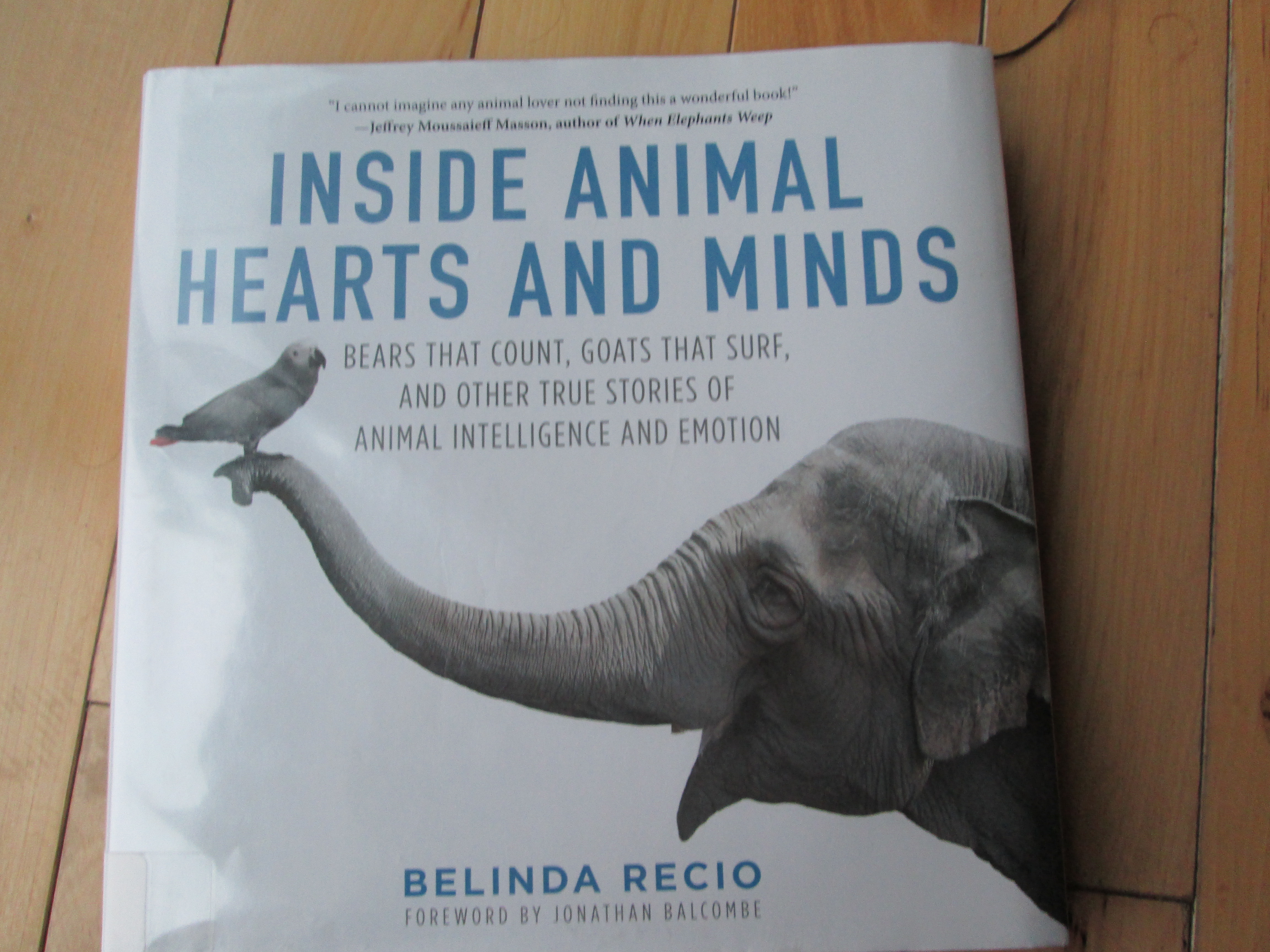
Inside Animal Hearts and Minds by Belinda Recio


If a cat and an iguana nuzzle each other and nap together, and a dog and a fish can ‘kiss’ upon meeting at the boundary between their terrestrial and aquatic worlds, then it’s time for humans to take a lesson from other animals in how to get along.”

Belinda Recio

 You wouldn’t imagine a crow saving the life of a kitten. Yet this is what happened in Massachusetts. Ann and Wally Collito knew that people would find the situation difficult to believe, so they videotaped the interactions between the crow and the kitten. Initially, they thought the crow would attack the kitten.

  The kitten had been abandoned on their property, and the couple witnessed how the crow, which they named Moses, fed insects and worms to the kitten, which they named Cassie. Moses nurtured Cassie and made sure she was safe at all times. This was a clear act of empathy and altruism between species.

 Cooperation used to be understood as one of the qualities that distinguishes human beings from other animals, but scientists are now starting to understand that cooperation is an important element of survival in the natural world. It is not unique to humans. Examples of cooperation in the animal world abound, and this book brings some of those together in a delightful, inspiring read.

   Qualities like loyalty, friendship, a sense of fairness, curiosity, empathy, creativity and even spirituality are not unique to humans. With both research and anecdotes, this book will broaden your perspective. It will help you to dissolve negative stereotypes attached to many animal species, and will enhance your understanding of the world around you.

 The book contains a foreword by ethologist Jonathan Balcombe, who has published over fifty scientific research papers on animal behavior and protection, and is also the author of Second Nature, which I reviewed in My Writing Life blog last year.

 Belinda Recio’s book showcases an amazing variety of heart-warming photos that make this reading adventure even more vivid and vibrant.


 The bad reputation assigned to rats is not justified. Research showed that 50 to 80 percent of the time rats were more interested in helping another rat in trouble than in a chocolate treat. Female crocodiles respond empathetically not just to their own hatchlings but also to those of other crocodiles. They even have playful relationships with river otters. You will learn about dolphins, octopuses, prairie dogs, orangutans, gorillas, parrots, goats, and many other animals.


 Albert Einstein once said that it is easier to disintegrate an atom than a prejudice. Hopefully, Belinda Recio’s book will prove him wrong.

Dive into Inside Animal Hearts and Minds, and immerse yourself in a world of wonder, awareness and empathy. Make sure you share it with the children in your life as well.


If you enjoyed this post, feel free to read my writing on Unlikely Friendships and Unlikely Heroes.

 Till next time.