Showing posts with label creativity. Show all posts

Wednesday, September 18, 2024

Nineteen Minutes by Jodi Picoult


 A few weeks ago, I received an email from PEN America informing me that Nineteen Minutes by Jodi Picoult had been banned in some places. The notification piqued my curiosity, so I requested the book from my local library. In the story there is a school shooting in which several people die. However, the book is not about gun legislation. The novel focuses on an issue that is often neglected: bullying.

  After reading the beginning of the novel, I wondered if I would be motivated enough to finish it. Why? The reason for my skepticism was that the behaviors of the teenagers showed an astounding degree of shallowness and frivolity. Their relationships were superficial and devoid of empathy and curiosity about the world around them. Their purpose was to be popular and to denigrate those who were different from them.

 The teenagers at Sterling High School behave in ways that follow a tyrannical set of social hierarchies in which a few students are considered "popular" and of higher status, and the ones who do not fit in are abused and treated with disrespect and contempt. Bullying is normalized as part of this “culture.”

   My thirst for justice along with Jodi Picoult’s captivating writing style held my interest, so I finished the read with a flow of reflections and the motivation to research the topic of bullying further, to support those who are trapped in this horrifying pattern. 

   My thirst for justice was not quenched when I reached the end of the novel. 

  The read left me with a sense of hopelessness.

  Jodi Picoult’s Nineteen Minutes deserves attention and can be used to share honest discussions on the issue of bullying in schools and everywhere.

  Peter Houghton was only five years old when he became the target of school bullies, on his first day of kindergarten. It was heartbreaking to learn that his Superman lunch box was thrown out the school bus window. No adult cared to intervene to help him. Peter was bullied on a daily basis for many years:

 “From that first day in kindergarten, Peter experienced a daily barrage of taunting, tormenting, threatening and bullying. This child had been stuffed into lockers, had his head shoved into toilets. He had been tripped and punched and kicked. He had a private email spammed out to an entire school. He’s had his pants pulled down in the middle of the school cafeteria. Peter’s reality was a world where, no matter what he did—no matter how small and insignificant he made himself—he was still always the victim. And as a result, he started to turn into an alternate world: one created by himself in the safety of HTML code. Peter set up his own website, created video games and filled them with the kind of people he wished were surrounding him.”

  Somehow his creative skills and sensitive nature were not valued by the standards of the school he attended. 

   It was shocking to read how the parents of the teenagers portrayed in the novel were detached from their own children. The communication between parents and teenagers lacked authenticity. It was as superficial as the relationships with the teenagers’ school friends.

  The teenagers did not communicate with their parents in genuine ways; a false sense of independence appears to cloud the potential for honest conversations between parents and teenagers. Hiding away issues from their parents is considered an acceptable indicator of their sense of independence. This detachment stems from the false notion of providing that state of the so-called independence. It is used to excuse, ignore and/or condone all kinds of behaviors that taint their process of growth and maturation. Some of these teenagers become sexually active at age 15, drink alcohol, take drugs and/or resort to all kinds of senseless behaviors at school. In some cases, their parents seem to condone or ignore these behaviors; they even seem to consider them acceptable or inevitable.

  At school, these teenagers did not have any kind of guide on how to behave toward one another. In fact, the school environment resembled that of a prison. It reminded me of John Taylor Gatto’s book Dumbing us Down, which I read over ten years ago, in which he compared schools to prisons.

  The fact that school staff are complicit in the bullying or even choose to punish Peter when he defends himself and never advocate for him leaves a very distressing feeling in the reader.

    For example, the gym teacher has a very distorted view of bullying. Dusty Spears, the gym teacher at Sterling School, understands bullies and is on their side. He thinks that bullying is a normal part of growing up and that bullies are supposed to be rewarded. This is clearly stated on page 656 of the large print edition, “Dusty Spears understands kids like Drew Girard because he had once been one. The way he saw it, bullies either were good enough to get football scholarships to big ten schools, where they could make the business connections...”

  One of the main characters is Josie Cormier. Her behavior changes through the years. She used to be Peter’s best friend, but during her teenage years, her behavior shifts in unpredictable ways as a result of a toxic relationship with her boyfriend and her motivation to be one of the popular girls. She becomes the girlfriend of one of the most violent bullies: Matt Royston. The most disturbing aspect of their relationship is that he abuses her emotionally and even threatens her physically. Everybody thinks they have an ideal romantic relationship when this is not the case. Matt and Josie are sexually active and Josie’s mother appears to be okay with that.

  Picoult exposes the abuse of Josie by Matt Royston by showing it through various unsettling situations, but Picoult does little to discuss the matter openly through the characters in a direct way to avoid the normalization of such a toxic relationship. I feel this is a weakness of the book. 

  The relationship between Josie Cormier and Matt Royston calls for a thorough discussion about respect in romantic relationships.  I was expecting that would happen at some point, but it never happened. The way I see it, this void in the book requires the work of mentors, parents, teachers and counselors.

    I was hoping and expecting that Alex, Josie’s mother, would have an insightful conversation with Josie on this, and that there would be a reflection on the relationship that was masked as “love.”

  The book was published in 2007. Has bullying changed since then? Are schools doing more to address it?  As I researched the topic to write this blog post, I was shocked to find an endless list of children and teenagers who committed suicide after they had been bullied. You can check this link yourself to verify my statement:

https://duckduckgo.com/?t=h_&q=cases+of+children+who+committed+suicide+after+being+bullied&ia=web

 If you come across people who underestimate and dismiss the serious effects of bullying, I encourage you to educate the deniers on the impact that bullying has. First of all, bullying is not a normal part of growing up. Bullying can lead to depression, anxiety, post-traumatic stress disorder, and other consequences. It can lead to suicidal ideation, and even suicide. It can rarely cause what Peter did. Peter followed the pressure of the social context in which he grew up and ended up doing what he did…

 There is a twist at the end of the novel that could have been fleshed out to shed light on the abusive relationship that Matt had with Josie, but not much is said about it.

  As explained in an article published by Frontiers in Public Health in 2019 bullying may include verbal hostility, teasing, physical violence and social exclusion, and the consequences of bullying can be severe:

 “Many studies have found that bullying is the root of severe negative psychological and physical consequences, including depression, anxiety, reduced self-esteem, decreased school attendance, somatization, as well as suicide, suicide ideation and attempts.” Some researchers claim that school bullying can cause symptoms such as those experienced by survivors of child maltreatment and abuse. It can even hamper bio-psycho-social growth.


 When bullying happens there is an imbalance of power between the perpetrator and victim, which can lead into a sense of helplessness and weakness. The pattern of bullying can undermine a victim’s sense of self and can cause short-term and long-term consequences.

 Why do bullies bully? They bully because they can. Lea Page says that it takes a village to make a bully… and it takes a village to stop one. Nineteen Minutes elucidates the roles that bystanders play in the social dynamics of bullying. I am now referring to those who witness the bullying without standing up to the bully. Some of the onlookers feel fear and guilt due to their own lack of response, so it is important to discuss this topic and to address it. Banning a book that deals with the topic is not the solution. Some bystanders celebrate the bully. They even support the bully and act in ways that perpetuate the pattern of bullying. I noticed that the “popular” girls had a positive attitude toward the revolting behaviors of Matt Royston and Drew Girard. They celebrated them.

When dangerous behaviors are normalized and celebrated, the pattern of bullying is established, creating an atmosphere where respect and kindness no longer matter.  

 In 2016 somebody said that he could stand in the middle of Fifth Avenue and shoot somebody and his supporters would still support him. Take a moment to reflect on this comment. What does it imply? This comment was made by a presidential candidate: Donald Trump. It implies that violence is acceptable in the eyes of his supporters. It implies that as long as he is responsible for the violence, his supporters will condone it and normalize it. This is dangerous. How can we teach ethical behaviors to children and teenagers when a pattern is set to make it acceptable for a man to do this?  How is it acceptable to make him president?  There is no way we can live in a civilized society when we empower a bully. In fact, one of his own 2016 supporters even tried to shoot him recently, which proves my point. (What goes around, comes around).

  The girls who cheered Matt Royston are not different from the adult women who celebrate and support a bully trying to become president, so I can see a pattern that needs to be addressed, because the ways adults behave are not ignored by teenagers, and they will make a difference in the way we live our lives.

   I hope this blog post will be a helpful resource to raise awareness on the topic of bullying. Bullying awareness month is coming up, so this is an opportunity to work to both prevent and address bullying in schools and everywhere.


 Supplementary links:

 https://www.unesco.org/en/articles/what-you-need-know-about-school-violence-and-bullying

https://www.psychologytoday.com/us/blog/experimentations/202010/us-high-school-bullying-rates-arent-going-down

https://hr.nih.gov/working-nih/civil/national-bullying-awareness-month

https://www.huffpost.com/entry/daughter-bullied-school-adult-bystanders_n_664fcce1e4b058247fa22914#

https://www.ncbi.nlm.nih.gov/pmc/articles/PMC6465416/


https://time.com/4191598/donald-trump-says-he-could-shoot-somebody-and-not-lose-voters/

https://www.cnn.com/2016/01/23/politics/donald-trump-shoot-somebody-support/index.html


 https://www.cbsnews.com/chicago/news/15-year-old-boy-cyberbullying-suicide-latin-school-chicago-lawsuit/

https://www.nbcnews.com/news/us-news/texas-child-died-suicide-online-game-cyberbullying-authorities-said-rcna129247

https://www.cbsnews.com/news/adriana-kuch-new-jersey-online-attack-video-four-charged/

https://wsbt.com/news/operation-education/rio-allred-bully-anxiety-depression-suicide-behavior-prevention-cyber-bullying-report-schools-respond-rios-rainbow-elkhart-indiana

Friday, January 6, 2023

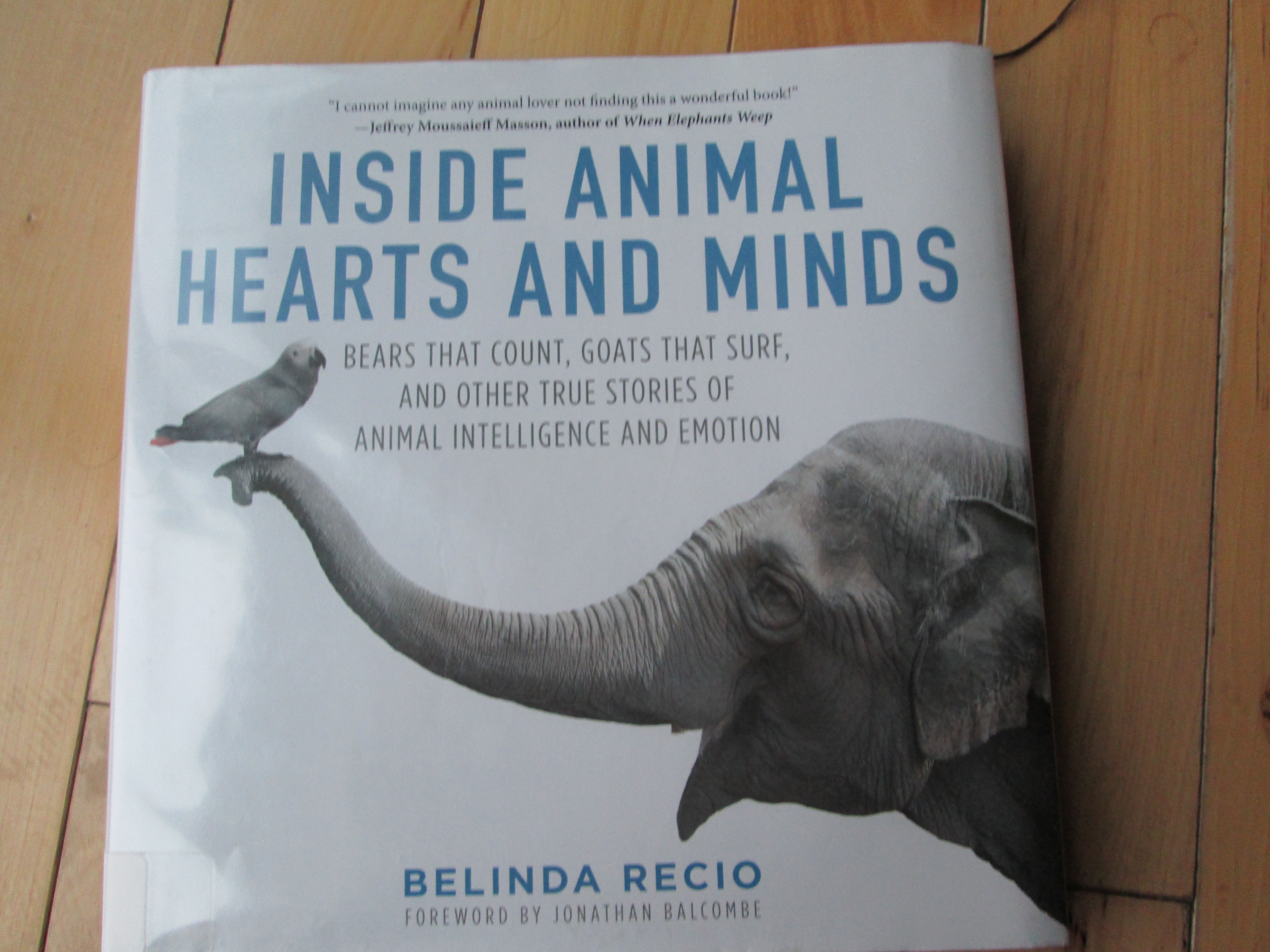
Inside Animal Hearts and Minds by Belinda Recio


“If a cat and an iguana nuzzle each other and nap together, and a dog and a fish can ‘kiss’ upon meeting at the boundary between their terrestrial and aquatic worlds, then it’s time for humans to take a lesson from other animals in how to get along.”

Belinda Recio

 You wouldn’t imagine a crow saving the life of a kitten. Yet this is what happened in Massachusetts. Ann and Wally Collito knew that people would find the situation difficult to believe, so they videotaped the interactions between the crow and the kitten. Initially, they thought the crow would attack the kitten.

  The kitten had been abandoned on their property, and the couple witnessed how the crow, which they named Moses, fed insects and worms to the kitten, which they named Cassie. Moses nurtured Cassie and made sure she was safe at all times. This was a clear act of empathy and altruism between species.

 Cooperation used to be understood as one of the qualities that distinguishes human beings from other animals, but scientists are now starting to understand that cooperation is an important element of survival in the natural world. It is not unique to humans. Examples of cooperation in the animal world abound, and this book brings some of those together in a delightful, inspiring read.

   Qualities like loyalty, friendship, a sense of fairness, curiosity, empathy, creativity and even spirituality are not unique to humans. With both research and anecdotes, this book will broaden your perspective. It will help you to dissolve negative stereotypes attached to many animal species, and will enhance your understanding of the world around you.

 The book contains a foreword by ethologist Jonathan Balcombe, who has published over fifty scientific research papers on animal behavior and protection, and is also the author of Second Nature, which I reviewed in My Writing Life blog last year.

 Belinda Recio’s book showcases an amazing variety of heart-warming photos that make this reading adventure even more vivid and vibrant.


 The bad reputation assigned to rats is not justified. Research showed that 50 to 80 percent of the time rats were more interested in helping another rat in trouble than in a chocolate treat. Female crocodiles respond empathetically not just to their own hatchlings but also to those of other crocodiles. They even have playful relationships with river otters. You will learn about dolphins, octopuses, prairie dogs, orangutans, gorillas, parrots, goats, and many other animals.


 Albert Einstein once said that it is easier to disintegrate an atom than a prejudice. Hopefully, Belinda Recio’s book will prove him wrong.

Dive into Inside Animal Hearts and Minds, and immerse yourself in a world of wonder, awareness and empathy. Make sure you share it with the children in your life as well.


If you enjoyed this post, feel free to read my writing on Unlikely Friendships and Unlikely Heroes.

 Till next time.

Saturday, May 12, 2018

Happy Mother's Day


To My Mother  (poem)


In my childhood years you planted curious seeds,
fountains of wonder
that continue to grow and evolve
into blossoms of hope today.

If I had to express my gratitude
I'd paint all your talents
on the canvas of life.

The older  I get the more I comprehend
your fortitude.

Your support is a humble presence,
and your light shines
inside me
like an eternal blessing
that will live on in our daughter's heart forever.

Monday, November 3, 2014

Synesthesia

" I saw all the colors in my mind; they stood before my eyes. Wild, almost crazy lines were sketched in front of me."
-Vasily Kandinsky

When I read "The Noisy Paint Box" to my daughter I learned the concept of synesthesia. "The Noisy Paint Box" is a book about Kandinsky’s childhood. In his writings Kandinsky describes hearing a hissing sound as a child when he first mixed colors in his paint box. Kandinsky experienced colors as sounds and sounds as colors throughout his life.
 It is thought that Vasily Kandinsky had a harmless genetic condition called synesthesia. Synesthesia is a word that derives from the Greek. It means “union of sensations”. There are more than sixty types of synesthesia. In people with synesthesia a stimulus in one sensory modality (e.g. vision) involuntarily triggers another sense (e.g. hearing). Scientists believe that this happens due to co-activation of different areas of the brain as people with synesthesia probably have more pathways between such areas.
 After reading this book to my daughter I wanted to learn more about synesthesia. One of the pioneers in the study of synesthesia is the neurologist Richard Cytowic who published a number of case reports and wrote books about it.
 Reading about synesthesia, however, left me with more questions than answers. I don’t know if I have synesthesia but what I do know is that I have  synesthetic experiences with some words. There are many words that elicit colors or images in my mind. A few of them can trigger flavors. Now this does not necessarily mean that I am a synesthete.
 Perhaps synesthesia is one feature that may or may not exist in people with creative trends. After all, the creative mind is adept at making connections and finding meaningful associations between things, ideas or objects.
 Do you ever have any synesthetic experiences, or do you know anybody who may have this condition? Share your experience.
 Here is a list of other famous people who may have had synesthesia:
Vladimir Nabokov (writer)
William Blake (Poet, writer and painter)
Albert Einstein (physicist, philosopher of science)
Isaac Newton (physicist, mathematician)
Olivier Messiaen (composer)
Richard Feynman (physicist)
Amy Beach (pianist and composer)
Charles Baudelaire (Poet)

I read somewhere that children are synesthetes but as they grow they lose the capacity to have these synesthetic associations. 
How about combining music with art in schools? Writing with music? Writing and art?    Physical movements and writing? Maths and art?
 Think about all the combinations. We tend to separate everything into boxes, and, as we do that, we may be curtailing our kids' creativity.        
Something to think about and research on. I hope neuroscientists and educators will work together to research this and enhance the educational experience. 
 If you want to learn more about synesthesia feel free to visit the website of the American Synesthesia Association


Sunday, May 4, 2014

The Invention of Morel


 After being accused of a crime he did not commit, a man flees to an island by boat. This man is a writer. He documents his experiences in a diary.
 This mysterious island has a museum, a church and a swimming pool.

 Living on this island is an experience of survival and discoveries. This is a place that hides many secrets. The sea catches him by surprise if he is not attentive to the tides. Surviving is a daily challenge. He navigates the vicissitudes of freedom, uncertainty and solitude.

 There are other human beings on this island, but they appear to be detached from him. One day he falls in love with a woman who contemplates the sunset every day. The woman ignores the narrator. Sometimes she reads a book. Sometimes a man with a beard is by her side, conversing with her. This man's name is Morel. Is she in love with Morel?
 Is this woman a real woman? Is the narrator truly in love with this woman, or is he obsessed with her?

 One cannot help but wonder, along with the narrator, if the other people on the island are aware of the writer's existence. Are they planning to catch him? Do their conversations have anything to do with his life?

Suspense, intrigue and magical realism intertwine throughout the novella to encourage our imagination to play with the vivid settings of this enigmatic island, and as we follow the writer's story, the limits between fantasy and reality become blurred.
 We are invited to accept our creativity as the soul of our own existence or as a projection of somebody's desires.

  The Invention of Morel is a novella written by Adolfo Bioy Casares(1914-1999), an Argentinian author who won several awards, including The French Legion of Honor (1981), The Diamond Konex Award of Literature (1994) and the Miguel de Cervantes Prize (1991).

Tuesday, August 27, 2013

Passion


I mentioned the word passion on my previous post.
What is passion?
 I believe passion is the essence of any kind of art. In my writing life passion is the intense desire to create something with words. It is attached to discipline. Discipline is what helps you to attain your goals.
  My main goal is to read and write something meaningful. Let me be clear on this:  my passion is not to convince people to read what I write.
 Working on your creative passion brightens the shore of your island. It invites you to see the world through refreshed eyes.
  I also believe that being passionate is about being sensitive. Our societies may mock sensitivity and there is a general trend to believe that being sensitive means being weak. I disagree.
  Being sensitive makes you stronger. Being sensitive is about feeling the world under your skin. This does not make you weak. It makes you more compassionate and mindful, and it invites you to expand in different directions and to embrace the bittersweet side of life.
    Being passionate encourages you to create ripples that will reach the shore of other islands and universes.
  Working on your creative passion makes you feel the heat of spring amid the winter; it brings you a cool breeze in the summer. It’s like holding onto a raft in the turbulent waters of life.
    Working on your creative passion enables you to grow flowers in the desert and it infuses you with the resilience of a weed that survives a drought. Your passionate creativity transports you to diverse settings and will enhance your own identity by pouring over you a different one.
  There’s a time to feel sad and a time to feel happy, and the pain of different situations opens up bridges and highways to other souls. You need your solitude just as you need your time to share a part of yourself with others.
   Being passionate is what allows you to appreciate the beauty around you and to celebrate each second of your life because being sensitive is about being alive. (If you can’t feel pain, you are not as alive as you think you are).
  Being passionate is about conjuring up a world of possibilities under the rocks that you encounter in your journey. Working on your passion is like being inhabited by a population of birds in the core of your being. You watch the birds fly away in different directions, and you feel the bliss of knowing that a part of you exists in those birds while your feet are happily dancing on the ground.