Showing posts with label pesticides. Show all posts

Wednesday, January 1, 2025

The Comfort of Crows by Margaret Renkl


 “What more could anyone ask from a new year than the promise –or just the hope—of renewal?” Margaret Renkl.

  I dare say that hope is not enough. Hope is in desperate need of awareness, reflection and inspiration to make sustainable, empathic choices.

  I was drawn into Margaret Renkl’s world when I learned about her interest in rescueing a sick fox. Margaret Renkl lives in Nashville, Tennessee, where she has formed a close bond with the wildlife on her backyard by observing her surroundings.

  The sick fox was probably suffering from mange. Margaret explains that mange is common in suburban foxes because the “manicured” gardens deprive foxes of the sources of food they need to survive. Under normal, healthy conditions foxes’ immune systems may be able to fight off the mites that cause mange, but suburban foxes suffer the consequences of the use of poisons that people use in their gardens. “Manicured” lawns use different poisons, and Margaret Renkl elucidates it in simple terms:

 “Homeowners set out poisons that keep seeds of weeds from germinating. Then they spray a different poison that kills any plants that germinate anyway. Still another poison kills the insects that eat the “desirable” plants. Yet another kills the field mice trying to survive in a place without fields.

“And those poisons end up in the air and the water. They end up in our bodies, linked to asthma, Alzheimer’s disease, Parkinson’s disease, autism, and several cancers.” She is distraught to watch the consequences of bluebirds ingesting poisoned insects, and Cooper’s hawks eating those bluebirds.

  I am thankful for this book, for it conveys the information that can make a difference in our communities.

  Over the years I've tried to communicate her message in several ways to different people, but to no avail. I witnessed a massive increase in the use of pesticides and herbicides recently.

  I used to relish the visit of various kinds of bees on the wildflowers in my pollinator garden, and I wrote about bees a few times here. Then in the year 2024 I hardly saw any bees in my garden. It was a lonely experience.

  I contacted a professor of entomology from a reputable university. I was sent multiple scientific papers, which validate my concerns and support the content of My Writing life blog. I have used several books at My Writing Life blog: Awareness, reflection, Inspiration to motivate people to do the right thing, but it has not been enough.

   I still come across the fake “pollinator gardens” with pesticides on the lawn. It is necessary to communicate the message with clarity: a pollinator garden with pesticides on its lawn is NOT a pollinator garden. Pesticides take a toll on the health of pollinators, so let people know that by using pesticides on their lawn they are not creating a pollinator garden. They are doing just the opposite.
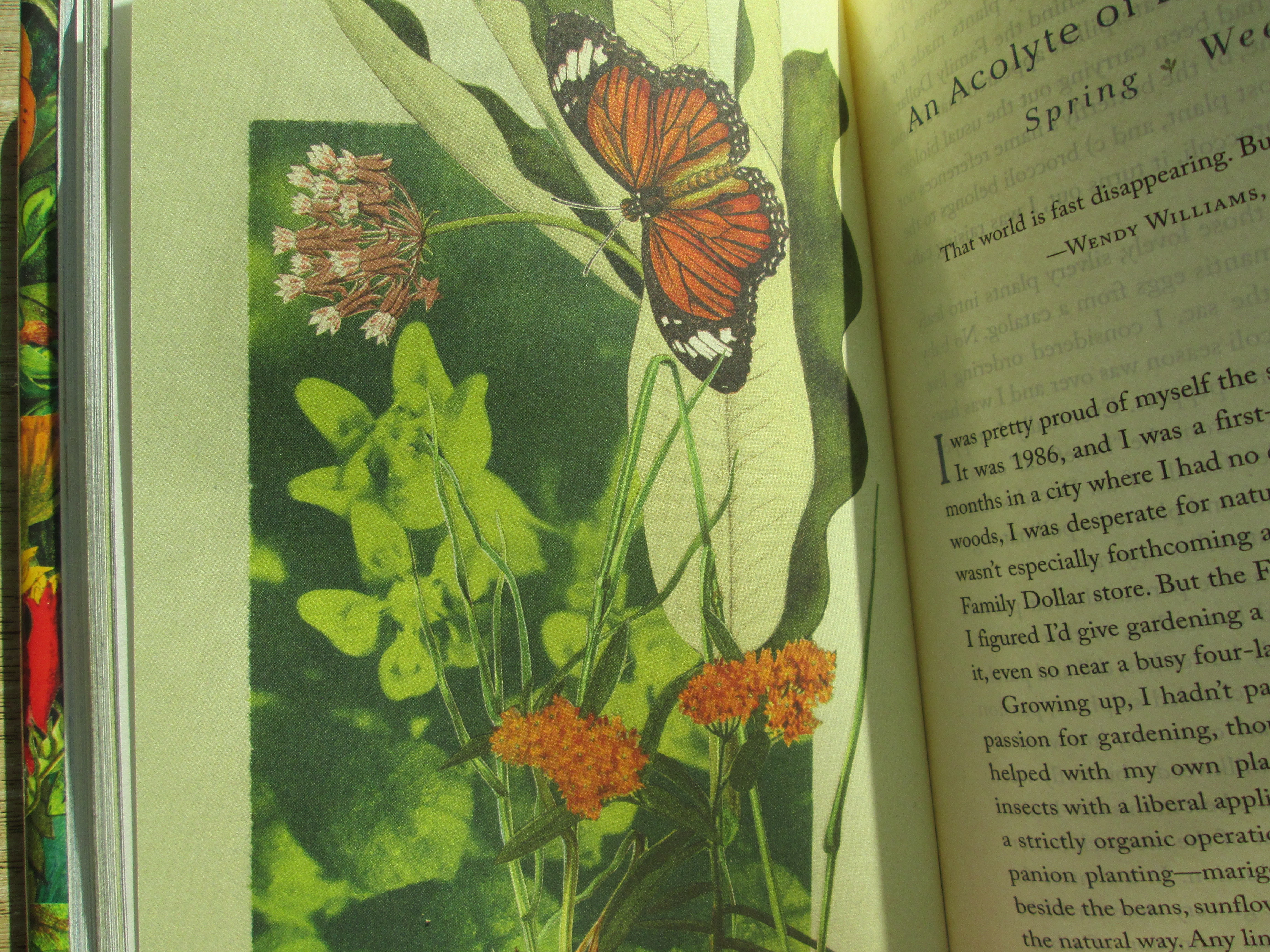

  What is not to like about the graceful flight of a monarch butterfly visiting our backyards?


  I am thrilled when I come across a toad in the safe haven of our garden. We don’t spray herbicides and pesticides in our yard. In refraining from spraying poisons, we create a little forest of hope in our tiny corner of Mother Earth.

 I could spend hours appreciating the masterpiece of patterns and colors that Mother Nature put together in this toad’s skin…I had never seen a toad like this one before, so I took this photo. Strangely enough, this toad has the smooth skin of a frog. I am enchanted by the beauty and mystery of this amphibian.  


  Did you know that toads can feed on thousands of mosquitoes every summer? Yes, they do eat a variety of insects, and mosquitoes are included in their menu. We don’t have to poison the toads. They are very sensitive to the chemicals humans use in their gardens. We need the toads to do what they are expected to do in maintaining the integrity of the ecosystems where we can all thrive without poisoning our water, air and soil.  


  With climate change getting worse, no repellent will be able to deal with the consequences of the proliferation of mosquitoes. Diseases such as Dengue and West Nile encephalitis, which are transmitted by mosquitoes, are rising steadily.

  Mosquitoes are part of the source of food for toads and spiders, and we need toads and spiders in the web of life, but the use of pesticides and herbicides are destroying their lives, and, in the process, we are suffering the consequences of this lack of judgment. The bats are also in need of protection, and I explained this before here.

  The gist of The Comfort of Crows

 The Comfort of Crows is akin to a personal journal in which Margaret Renkl shares her connection with wildlife and her concerns over what we humans are doing to the environment and to ourselves. There are threads of her personal life interwoven into her narrative, but the charm of her book lies in her observations of wildlife and her response to her setting. In other words, she shares her poetical musings and the practical ways in which she tries to support what remains amid the destruction caused by irrationality, denial and neglect.

  The limitations of her actions did not stop Margaret Renkl from making choices that leave sparks of hope for the reader.  


   She contemplates the wonders of the four seasons, marveling at the lives of the creatures that surround her. She also shares the grief that emerges from watching nature closely. The effects of climate change and the multiple poisons that people use in their “manicured” gardens are evident.

   I think we should start calling them gardens of death or doom instead of using the word “manicured” gardens to refer to the abuse of such chemicals.

    It was also heartbreaking to read about the loss of some of the trees in her own garden, which took place after the happily married couple next to her backyard died. The builders came with their equipment and harmed the roots of her own old trees.

  As you know, the roots of trees do not understand anything about property lines, so the parts of the roots that were harmed in her neighbors’ home killed her trees altogether.

  The thoughtless actions of these builders could be used as a metaphor and a symbol of the lack of awareness and empathy in certain human behaviors.


Trees are not just trees

   Trees provide the oxygen we need to survive. They provide relief from the intense summer heat and protect the soil from erosion. Trees are not just trees, but they are also the organisms that live in them. Furthermore, trees supply the dead leaves that feed the soil, the leaves that form the shelter on the ground to various living beings belonging to complex ecosystems that support our own life on earth, and all these creatures play necessary roles in the precious web of life. You may not see them, but they are there and they need those dead leaves on the ground.  


  Using mathematics to spark awareness

   You will encounter people who don’t understand that destroying the environment is bad for the economy. I come across them often. We are responsible for helping them understand that supporting the health of ecosystems makes our economies stronger, and we have to make clear that destroying ecosystems is shattering economies across the world. To do so, we can use the power of mathematics. I can give a few examples here:

   A single bat can eat 3,000 insects in one night. Bats contribute one million dollars a year to Thailand’s economy by helping to reduce the loss of rice crops. In the United States of America, bats save three billion dollars every year by protecting corn and cotton crops. In addition to being pollinators, bats’ droppings are effective fertilizers. Poisoning their sources of food is a very bad idea.

  More than 80 percent of the leading 115 major crop species worldwide depend on or partially benefit from floral visitation by animal pollinators. Pollination by animals contribute to an estimated 35 percent of global total crop production. Globally, the animal value of insect pollination of plants was estimated to be around 190.5 billion U.S. dollars.

  In addition to addressing the massive use of pesticides and herbicides, we have to acknowledge and tackle the climate crisis. Climate change will continue to increase the price of food. In 2023 extreme weather events such as heat waves, droughts and floods were the main disruptors of food prices, even though the mainstream media has failed to report this critical issue consistently. These events caused widespread damage to crops and livestock globally.

 Rice, for example, cannot get efficiently self-pollinated in hotter temperatures. Extreme heat degrades the grain quality and reduces its yield.

 Severe weather patterns degrade the quality of our produce. Heat waves scorch fruits and vegetables. Furthermore, an excess of carbon dioxide in the atmosphere affects the micronutrient content of produce.  The elevated levels of carbon dioxide led to a decrease in the root uptake of nutrients by the plants according to research. A decline in the content of minerals in the plants, such as zinc, potassium, nitrogen, calcium, magnesium, phosphorus, iron and copper due to high levels of carbon dioxide in the atmosphere has been well documented.

 Severe weather events are expensive reasons for crop loss: for example, 118.7 billion dollars in 2021-2022 were lost in crops value.

  In the year 2024, 500 billion dollars were lost in damages in the United States of America due to extreme weather events according to a report by AccuWeather. To understand how disaster events are on the rise, it may be helpful to check the graph from this link of Yale Connections:

https://yaleclimateconnections.org/2024/01/u-s-billion-dollar-weather-disasters-set-an-all-time-record-in-2023-with-28/


 The artworks in this post and my final message

   I have shared some of the delightful artworks included in the book. The artist who created the masterpieces is Billy Renkl, Margaret’s brother.

   I will close this post with a quote by Margaret Renkl, because it summarizes what she tries to communicate in The Comfort of Crows:

     “I rejoice in what is eternal, even as I force myself to face what is not, to let my heart be broken again and again and again. The very least I owe my wild neighbors is a willingness to witness their struggle, to compensate for their losses in every way I can, and to speak on their behalf about all the ways I can’t.”

Here’s a video about the differences between toads and frogs and how you can protect them:

https://www.youtube.com/watch?v=IF0EWfbevrM

 I also invite you to learn about Dr. Tyrone Hayes's story:

 https://www.youtube.com/watch?v=hp-Bvp2oOyQ

 Feel free to share this blog post with your friends. Let’s create ripples of hope and positive changes for the New Year.


 Photo of fox is by Scott Walsh. Source: Unsplash.com


    Relevant links:

https://xerces.org/press/new-report-finds-that-bumble-bees-have-undergone-dramatic-declines

https://hsph.harvard.edu/news/pollination-loss-removes-healthy-foods-from-global-diets-increases-chronic-diseases-causing-excess-deaths/

https://yaleclimateconnections.org/2024/03/we-need-to-talk-about-food-prices/

https://pmc.ncbi.nlm.nih.gov/articles/PMC8803495/

 https://www.beyondpesticides.org

https://www.theguardian.com/environment/2024/dec/26/us-farmers-embracing-wildflowers-prairie-strips-erosion-pollinators


If you enjoyed this blog post, feel free to check my writing on the following books:

 Sweet in Tooth and Claw by Kristin Ohlson

What a Bee Knows by Stephen Buchmann

Hurricane Lizards and Plastic Squid by Thor Hanson

Volcanic Adventures in Tonga by Ann Goth

Addendum: after consulting an expert in amphibians, I learned that my photo shows a Gray Treefrog. (I suspected it could be a kind of frog and I was correct). 


Wednesday, November 1, 2023

Beyond the War on Invasive Species: a Permaculture Approach to Environmental Restoration by Tao Orion


It is not the strongest of the species that survives, nor the most intelligent that survives. It is the one that is the most adaptable to change.”-Charles Darwin

Thousands of animal and plant species are in the process of migrating to adapt to the conditions that climate change imposes on them for their survival. Considering this fact, how can we expect ecosystems to be “unchanged”? We can’t. Ecosystems are dynamic. The concept of “invasive” species becomes a controversial one when one cares to analyze the intricate ways in which everything is connected.

  New species have to adapt to their new surroundings. You are not alone if you have been wondering about the implications of the new situations that arise as a result of climate change and other phenomena. I have noticed how this subject has been conveniently neglected, so I am thankful for Tao Orion’s book.

    Tao Orion explains that non-native species are the symptoms of a complex situation caused by human actions such as logging, mining, emissions of greenhouse gases, unsustainable agriculture, pollution, war conflicts and other human destructive behaviors. The root causes of the presence of invasive species are not even taken into consideration when resorting to the use of herbicides and pesticides with the futile goal of eradicating a species under the delusion that these chemicals will not affect the native ones. (These chemicals may increase the revenue of the manufacturers, but there is no evidence that they support biodiversity, human health and the environment).

 When Tao Orion was employed to restore land in 2010, she was shocked to learn that she was expected to use Round Up for her work. As an organic producer of food, she disagreed with this management. Today we know more about the effects of herbicides and pesticides, and we are continuously learning about the consequences of climate change, so Tao Orion’s book has become more relevant.

  Research on the effects of Glyphosate, for example, continues to emerge. In 2023 research conducted by scientists at UC Berkeley School of Public Health showed that “childhood exposure to the world’s most widely used weedkiller, glyphosate, is linked to liver inflammation and metabolic disorder in early childhood, which could lead to liver cancer, diabetes, and cardiovascular disease later in life.” You can read about it here, and learn more about the researchers’ recommendations.


  While it is necessary and important to foster the growth of native plants, it is also crucial to understand the issues that bring in new species to a place in order to address the root causes of the shift instead of adamantly trying to eradicate a so-called “invasive” species. It is also crucial to understand how new species interact with the environment, because this may help to advocate for strategies that can integrate non-native species into the new environment. For example, pollinators may benefit from flowers that are not considered to be native.

  Even though Tao Orion’s book was published in 2015 and some specific points may be outdated, her approach introduces the science of permaculture to restore ecosystems, and encourages us to apply this knowledge to our daily choices in our own gardens. The book contains a foreword by David Holmgren.

  Tao Orion advocates for methods that consider the relationships in ecosystems, not only those among the living beings in specific habitats but also their interactions with water, air and soil.

 Classifying species into “native” and “invasive” groups is akin to labeling them as the “good” versus the “bad” ones.

We could define nativism as the war against naturalizing species, an ideology that sought to separate nature into good and bad species according to some fixed historical reference.” A paradigm shift is necessary. Ecologist Haikai Tane in New Zealand coined the term “ecosynthesis” to describe the restoration of ecosystem function in the process of combining native and foreign species that colonized abandoned landscapes.


I invite you to read this interview with Tao Orion to learn more:

https://macskamoksha.com/2022/02/beyond-the-war-on-invasive-species-interview-with-tao-orion

  You can also listen to a podcast with Tao Orion at Reseed Canada:

https://www.reseed.ca/listen/remembering-we-are-stewards


 As I type these words, my gaze wanders out the window to embrace the vibrancy of the fall leaves swirling and settling on the ground, creating a composite of hues: ochre, yellow, red and orange. Leaves are an excellent source of nutrition for the soil. Putting them in plastic bags to send them to the landfill is a very poor decision. Leaves are rich in minerals that can support the soil and the development of new plants. People waste money buying mulch when they could simply use the leaves as mulch. The leaves can also be shredded before using them for compost. This link provides some ideas.

 The leaves on the ground also form habitats, establishing new sources of shelter and food for various creatures. There are many worlds of life around us that we often take for granted…


 If you enjoyed this post, feel free to visit my writing on the following books:

Sweet inTooth and Claw: Stories of Generosity and Cooperation in the Natural World by Kristin Ohlson

Deer Man by Geoffroy Delorme

The Wisdom of Wolves by Jim and Jamie Dutcher


Helpful links I encourage you to visit:

https://www.beyondpesticides.org/

https://www.drugwatch.com/roundup/alternatives/

https://www.drugwatch.com/roundup/glyphosate/


Monday, July 24, 2023

What A Bee Knows: Exploring the Thoughts, Memories and Personalities of Bees by Stephen Buchmann


  Bees remember and recognize human faces. I wrote about this on a post last year, and I mentioned some facts about the fascinating brain of a bee.

 The brain of a bee is about the size of a poppy seed, but it contains almost one million neurons.  I was thrilled to discover Stephen Buchmann’s book, which was published by Island Press this year, so I borrowed it from the library as soon as I learned about it.

 Buchmann is a pollination ecologist who specializes in researching bees. His book takes us on an adventure to explore their sensations, minds and experiences. His goal is to spark wonder and curiosity for bees, and to dispel fears. 

 Buchmann describes the structure of a bee brain and the ways it functions. I was astonished to learn that brain chemicals (neurotransmitters) that exist in our own brains and influence our behaviors also exist in bees. For example, serotonin and dopamine are also found in bees. 

 What a Bee Knows reveals details about the intriguing lives of different species of bees. We learn about their behaviors, moods, nutrition and special abilities. Most bees feed on pollen and nectar.

 You may have heard about the “bugs” living in our gut, and how these bugs make up the composition of our microbiome. Our microbiome is linked to our health and general wellbeing. You will be surprised to learn that bees also have a gut microbiome. Researchers are actively studying their microbiome and how this amazing assemblage of bacteria, fungi and viruses is connected to their health. For example, Buchmann and his colleagues have found Lactobacillus in the gut of honey bees.

 Some of the components of the bees’ microbiome transfer from the pollen of flowers when the bees visit the flowers, and some of the protein from the microbes in the pollen are part of the nutrition of the larvae of the bees.

 Pesticides and herbicides in the environment cause a disruption of the microbiome of bees, and this has the potential to compromise their health. Currently, bees are in serious decline and there are many reasons for this.

  Climate change is an important one. The massive amounts of carbon dioxide spewed by burning fossil fuels continues to worsen climate change. Everybody is impacted by climate change. Bees are not an exception. Pesticides are fossil fuel- based, so they belong to the same issue that deserves our attention and understanding.

 Let’s share some figures from Buchmann's book to emphasize the need to protect bees:

"About 80 percent of the world’s 369,000 species of flowering plants depend upon insect pollination for fruit and seed set. More than 80 percent of the leading 115 major crop species worldwide depend on or at least partially benefit from floral visitation by animal pollinators. Pollination by animals, with bees predominating, contributes to an estimated 35 percent of global total crop production. Globally, the annual value of insect pollination of crop plants is estimated to be around 253 billion US dollars".

 Bee pollination improves both the quality and quantity of the crops. Food, fiber and beverage production depend on bees. Bees even ameliorate shelf life and commercial values. "We need bees more than they need us". 

  It is time to push human arrogance aside and do what it takes to support them. The good news is that we can help bees to survive and thrive by making mindful choices:


Plant wildflowers. If you don’t have a yard, use your window sill. Everything helps. Avoid buying hybrid flowers because those plants are selected to please humans, not pollinators, so they may have little nectar or pollen. Choose plants that are adapted to the local soil and climatic conditions. Native plants will entice a vast array of pollinators and will enliven your garden in delightful ways.

 Avoid using insecticides. Neonicotinoids, for example, are responsible for decimating bees and other pollinators and they still continue to be on sale.


 You can learn more about this here:

 https://wisconsinpollinators.com/Articles/Neonicotinoids.aspx

Roundup contains glyphosate, which affects the gut microbiota of honey bees. Other ingredients in Roundup are also toxic.

Avoid using lawn chemicals. Lawn care products contain hidden insecticides and herbicides. Besides, you risk harming yourself, your family and your pets. Enjoy the dandelions and clover. Remember that clover enriches the soil.

Avoid herbicides; they lower the number of blooms. Roadside weed blooms are food sources for various pollinators. Even though fungicides used on fruit trees don’t kill bees directly, they contaminate the food used for the bee larvae. This contamination affects the gut microbiome, whose integrity they need to stay healthy. 

Avoid mulching flower beds or paths. Thick-chipped bark mulches in flower beds harms bees. Around four thousand species of native bees in the United States are ground nesting. They need bare ground to make their nests.

Dead trees or limbs provide a habitat for leafcutter bees, mason bees, and other wildlife. Don’t remove them. 


There are projects you can join to support bees as a citizen scientist. You can also visit sites that post relevant information about bees:

https://www.beesinyourbackyard.com


  It goes without saying that everything we can do to address climate change is crucial  to protect bees as well. 

 Understanding the complexity of their brains and behaviors is an important aspect of the book. However, when the author compared the bee brain to the human brain he stated that human beings are born with a fixed number of neurons, and that this number does not change after birth. This has been debunked by research. Neurogenesis has also been documented in human brains, and it is also relevant to emphasize the concept of neuroplasticity. 

 Neuroplasticity is the process through which new connections and pathways develop in the brain, and brain stimulation plays an important role in boosting neuroplasticity. Doing activities that stimulate the brain, such as reading, learning new skills and other activities can help to foster neuroplasticity. The good news is that keeping a healthy lifestyle with adequate nutrition, sleep hygiene, exercise and meditation helps to support the neuroplasticity of the brain. The bottom line is that neuroplasticity happens in bees as well as in human beings.

  I found this amazing interview to Dr. Julia Basso. She is a neuroscientist, yoga instructor and dancer who researches the effects of yoga and dance on the brain. Last but not least, if you want to keep your brain healthy, avoid smoking, alcohol and drugs as part of your supportive plan.

 I never understood the fear of bees. I work alongside them without any kind of problem. If we treat bees with respect and consideration, they have no reason to attack us, so it is time to make choices that support their survival. We can all do our part to protect them. In doing so, we are supporting our own wellbeing as well as the present and future of all life in this beautiful planet.


References related to this post:

https://wisconsinpollinators.com/Articles/Neonicotinoids.aspx

 https://phys.org/news/2023-05-evolution-honey-bee-brains.html

https://beyondpesticides.org


Saturday, October 22, 2022

The Atlas of Disappearing Places: Our Coasts and Oceans in the Climate Crisis


Someone once wondered why it is that if a work of man is destroyed, it is called vandalism, but if a work of nature is destroyed it is often called progress.

Jane Goodall, Seeds of Hope

We only know about 9 percent of the 2.2 million species that inhabit the ocean. This means that about 91 percent is unknown to us. There is a complex elusive world under attack by us, humans, as we continue to dump plastic, fertilizers, toxic metals, pesticides, sewage, agricultural runoff, oil, etc. These chemicals kill and contaminate the fish that feed three billion people. Coastal pollution leads to the spread of infections; oil spills and various chemicals compromise the oxygen supply of ocean creatures.

  Phytoplankton are single-celled creatures that produce 50-80 percent of the oxygen on earth, so protecting oceans is tied to our own survival. Along with tropical, temperate, and boreal forests, phytoplankton make up the “lungs” of the planet.


 The warming of the oceans as a result of industrialization affects life in the sea. Warm water holds less oxygen, and the requirement for oxygen at warmer temperatures increases, so this creates a deficient supply for living beings in the sea. Furthermore, I already wrote about the acidification of the oceans due to the high emission of carbon dioxide by human activities when I reviewed the book Hurricane Lizards and Plastic Squid by Thor Hanson. In my post, I also explained what corals are and the bleaching that takes place when the water is too warm.

  The Atlas of Disappearing Places: Our Coasts and Oceans in the Climate Crisis, by Christina Conklin and Marina Psaros, details some of the challenges and transformations that various places are facing as a result of pollution and climate change, two issues that are inextricably interwoven.

   There is a chapter for each individual place; the authors explore the environmental issues and how they are affecting the economy. There is a section about their projections for the year 2050. In other words, in that section of the chapter the writers pretend that they are already in the year 2050, and they describe the outcome of the situation.

 The places portrayed and explored in the book include the following: Kure Atoll, Hawaii; the Arabian Sea; Camden, Maine; the Cook Islands; San Francisco Bay; Houston, Texas; New York city; Hamburg, Germany; San Juan, Puerto Rico; Kutupalong Camp, Bangladesh; The Arctic Ocean; Pisco, Peru; The North Atlantic Ocean; Ise, Japan; Kisite, Kenya; Pine Island Glacier; Shangai, China; The Thames Estuary, Britain; Ben Tre, Vietnam; and Hampton Roads, Virginia.

The book addresses the need to act to create a habitable future on earth for our descendants.

 Kisite, Kenya, is one of the places described:

For decades, the diversity and bounty of Kenya’s small-scale fisheries have been in decline. Unsustainable fishing practices-including cyanide to stun fish; bottom trawling to scrape from the seafloor into big nets; and exceeding (or failing to set) quotas on threatened fish species—are some of the culprits. Kenya has worked hard over the past few decades to better protect its wildlife, including designing a number of new marine protected areas that aren’t protected (MPAs). These areas, which restrict extractive activities, show increased biodiversity and larger numbers of fish over areas that are not protected.

 Even though Kenya has attained some degree of success, it is still seeing declines in fish and the degradation of coral reefs as a result of ocean warming, polluted runoff from coastal towns, and illegal fishing activity. This has deleterious effects for the thousands of subsistence fishers in Kenya, and it impacts tourism as well.


Perhaps the greatest feat of the book is to spur us to do our part to work toward a better outcome. Every individual action matters; each day is an opportunity to learn and improve, to lead the path toward a better future. Policies also matter. Voting is crucial to make sure that we support measures that care about the quality of the air and the water, so contact your representatives and inform yourself. It is an ethical responsibility to remember, no matter where you live.


There are many interesting facts that will help remind people to make better choices each and every day:

 We wash eight million tons of plastic into the ocean each year, and even countries with good waste management recycle very little of it—just 30 percent in Europe and 9 percent in the United States of America. By 2050, one major study projects, if we continue on the same consumption trajectory, there will be a pound of plastic in the ocean for every pound of fish.

 Chemicals in plastic, such as bisphenol A and phthalates, are endocrine disruptors and they cause cancer in humans. They also harm animals in the sea. It takes over five hundred years for plastic to break down, and the tiny particles remain in the environment, having an impact on marine life and our own health.

 Here's a recent report on the possible effects of microplastics on the brain.


    Placing plastic in the recycling bin is not a guarantee that it will get recycled. According to a recent article in the Smithsonian Magazine, only 5 percent of the total plastic met the conditions to get recycled during the year 2021 in the United States of America. Hence, it is necessary to reduce or avoid the use of plastic altogether.

  Despite our differences, we all want and need clean water and air, so we should do more to protect the planet. We depend on the existence of healthy soil as well. Yes, clean energy is crucial; conservation is paramount.

 The only aspect I did not like about the book is the authors’ utilitarian view of animals. I think they could have offered another perspective on this, one based on the current scientific research, to promote empathic solutions…

 What will our descendants say about us in a hundred years? It will depend on our actions in the 2020s…

I came across this lovely quote this past week:


The quote concludes that the earth is sacred, so we should treat her with respect and align our actions with this ethical principle. We are the Earth; the Earth is us. We know that when we harm the Earth and other creatures, we are harming ourselves.


The quote reminded me of the speech by Chief Seattle, a Suquamish chief. My mother shared it with me when I was little, and it has become relevant today:

“The President in Washington sends word that he wishes to buy our land. But how can you buy or sell the sky? the land? 


The idea is strange to us. If we do not own the freshness of the air and the sparkle of the water, how can you buy them? Every part of the earth is sacred to my people. Every shining pine needle, every sandy shore, every mist in the dark woods, every meadow, every humming insect. All are holy in the memory and experience of my people.


We know the sap which courses through the trees as we know the blood that courses through our veins. We are part of the earth and it is part of us. The perfumed flowers are our sisters. The bear, the deer, the great eagle, these are our brothers. The rocky crests, the dew in the meadow, the body heat of the pony, and man all belong to the same family. The shining water that moves in the streams and rivers is not just water, but the blood of our ancestors. 

 To read the full speech, you can go here.


I will publish my next post on November 11.

Enjoy the ride on My Writing Life blog.


Thursday, October 22, 2015

Silent Spring

In the year 1962 a woman stirred the waters of conformity and ignorance by writing and publishing a book. Her name was Rachel Carson. She wrote about the ecosystems and  about how the misuse of pesticides exacerbates the problems with insects and weeds instead of controlling them. She also delved into the effects of many of these chemicals on human health. Why is this important?   
Fifty three years later her book “Silent Spring” continues to have relevance: the food we eat and the water we drink contain pesticides. The case of Atrazine can be used as an example to illustrate how her words resonate today.
 Atrazine is a pesticide used to kill weeds. Research has shown that Atrazine can cause cancer in mammals and developmental problems in fish. It also changes male frogs into females. The European Union banned the use of Atrazine in 2004. The corporation that manufactures this chemical is in Switzerland (Syngenta). I surmise it has “power” over the decisions made by EPA because in the United States of America Atrazine continues to be used.  90% of the drinking water in the United States of America contains Atrazine.
 We signed a petition to encourage the authorities to ban the use of Atrazine, but so far nothing has changed. (Profits matter more than human health and the environment).

 Reading Rachel Carson’s Silent Spring motivated me to learn more about pesticides and the current situation.

 The use of glyphosate
The most well-known glyphosate is “Roundup. It is manufactured by Monsanto.
 The use of glyphosate is associated with birth defects, cancer, miscarriages and stillbirths. In the year 2010 Professor Andres Carrasco of Buenos Aries Medical School in Argentina published his findings on the effect of glyphosate (Roundup) on chicken embryo. He decided to work on this kind of research after observing what happened to the people who live close to the farms. However, Monsanto still claimed that its Roundup product was safe.
 There were violent attempts to silence Carrasco and his group. Four representatives of Argentina’s crop protection trade group CASAFE tried to raid his laboratory. He was also the focus of an orchestrated attack in which three people were seriously injured when he was in an agricultural town in Argentina called La Leonesa, where he explained the findings of his research. Carrasco escaped injury by locking himself in a car.
  Glyphosates started to be used in La Leonesa in 2000. Birth defects increased fourfold in the region around the town between 2000 and 2009, and the rate of childhood cancers tripled over the same period.  Glyphosates are still used in Argentina. Again, profits matter more than human health.

 Despite the hazards associated with the use of these chemicals manufactured by Monsanto they are also used widely in the United States of America, not only to grow food but also to control weeds in parks and pavements. On the other hand, countries like the Netherlands, Denmark, and Sweden have either banned glyphosate or have restricted its use. 
 Roundup is spread on about 12 million acres of American farmland every year. Now the so-called "Superweeds", which are resistant to Roundup, are emerging. Rachel Carson discussed these patterns of resistance and an exacerbation of the original problems as a result of the abuse of pesticides.

 Rachel Carson also explained  that pesticides contained in runoff from farms and forests are being carried to the sea in the waters of many rivers. She pointed out that the funds to research the changes that these chemicals undergo during the transit period are small. She proposed that some of the money invested in the development of toxic sprays should be used on research to use less dangerous materials and keep poisons out of the waterways. Then she asked the following question: when will the public become sufficiently aware of the facts to demand such action? Her question is relevant today.
What can we do?
Educating ourselves and our communities is our duty. 
 Make wise choices. Reduce your chemical imprint.
Support organic farming practices.
Environmentalists are urging farmers to adopt the principles of integrated pest management (IPM), which encourages the use of less toxic products and the use of other methods. Ladybugs, for example, are the natural enemy of many insects.
 The EU encourages the reduced use of pesticides on farms and in homes. It has created a directive on the sustainable application of pesticides.

References:

https://www.rt.com/usa/314544-california-epa-glyphosate-carcinogenic/https://www.rt.com/usa/314544-california-epa-glyphosate-carcinogenic/


Saturday, July 18, 2015

Can you see it too?


Did you know that frogs help to curb the population of mosquitoes?
My daughter and I love frogs, so when I heard about a two-week summer camp that focuses on frogs I signed her up for it. The kids go on field trips, do crafts and learn about frogs.
  I was disappointed to see that they keep frogs in bowls. My daughter talked to the teacher about setting them free and she was told that those frogs belong to them. Then I explained to my daughter that those frogs do not belong to human beings; they belong to nature.
 We don’t need to be smart to understand that those frogs are suffering.  
  Is this the way they teach about compassion to kids?
 Are they imparting the message that their suffering is okay as long as we ignore it?
 Being more powerful than the frogs does not mean that it is acceptable to imprison them.
 I promised my daughter that I will write a letter to her teacher.
 Later that day we came across this lovely picture book at the local library: Growing Frogs by Vivian French; it was illustrated by Alison Bartlett.
 On the first page we read the following words:
 Frogs are in danger. Please help!
Rules for frog-lovers:
Don’t take frog spawn from a pond in the wild
You should only take frog spawn from a man-made pond and only take a little.
Always take your frogs back to the pond they came from.

 We live in a neighborhood of educated people. Yet they seem to ignore that the chemicals they use to kill weeds are harming frogs. How about teaching kids about compassion by respecting nature?
 Ignorance has its own consequences. Human beings are also part of nature and, whether we acknowledge it or not, pesticides end up in the water we drink.