Showing posts with label climate change. Show all posts

Friday, July 24, 2026

The Humane Gardener by Nancy Lawson


   When I was a child, I marveled at the hundreds of fireflies that lit up our backyard every summer. Today I continue to be mesmerized by their lights on summer nights, but there are less of them, and they are at risk of extinction.


   If you want to make sure your children and grandchildren have the privilege to watch these stars on earth there is a lot you can do. It costs no money, but it does require common sense and empathy: leave the leaves on the ground. There are no excuses to kill their babies. When people rake leaves to throw them away, they condemn their babies to death. The use of leaf blowers also leaves a trail of devastation, disrupting the habitats of bees, moths, butterflies, birds and small mammals.


       Everything is interconnected in multiple ways. When we allow the leaves to stay on the ground--where they belong—they get decomposed and provide crucial nutrition for the trees. The leaves on the ground are also the natural shelter of various living beings that are a source of food for the birds. Why would anybody choose to starve the birds or to poison them? It takes common sense to leave them in peace. Again, it does not cost money but it does require empathetic attitudes.

    To support birds and the ecosystems in which they thrive, it is also important to avoid spraying pesticides and herbicides. By avoiding these toxic chemicals, you will also decrease the risk of making your pets and your children sick with cancer, and you will ensure that birds have a variety of safe food sources. Last, but not least, make choices that help to address climate change because global warming is also killing fireflies. Avoid light pollution. I wrote about light pollution here, so make sure you read it and share it. Turn off outdoor lights. You will save money and save the lives of fireflies and other living beings.


  I appreciate how this book dispels myths and falsehoods that mislead people and make them behave in cruel ways toward wildlife. It provides practical ideas and suggestions to coexist in harmony with wildlife while supporting the healthy growth of your garden and protecting the quality of the water, air and soil. The book contains photos that enhance the reading experience. It makes a good gift for your loved ones...


Opossums

Opossums are not aggressive. They have no way to fight back when challenged. All they do is drool, hiss and sway. Yet they are one of the most abused mammals by human beings. Opossums are intentionally run over, set on fire and doused in insecticides.

Did you know that opossums eat the annoying ticks that cause Lyme’s disease?


 Opossums, skunks and many other misunderstood animals can be beneficial in the garden. Irrespective of the fact that they are beneficial, the humane thing to do is to let them live their lives and to respect them. It is not my intention to be preachy here, but I think we should state the obvious sometimes. Why do human beings think they have a right to be cruel to others?


Compassionate ways of deterring wildlife

Lavender keeps deer from devouring carrots and beets. Anisse hyssop can protect tomatoes from grazing mammals. Spraying cayenne pepper deters ants and squirrels.

 Avoid the purchase of commercial repellents that may be marked as “humane” but are obtained by abusing animals. For example, predator urine sold as a natural way to scare off wild visitors is collected from coyotes, foxes and other animals raised in wire cages on fur farms. Avoid purchasing these products if you don’t want to be complicit in this abuse.

 The information in this book encourages the reader to make decisions that are rewarding not only to the gardeners but also to wildlife.

  It also shares the experiences and stories of different people who changed their ways of gardening to support nature around them. Manicured gardens loaded with pesticides and herbicides are gardens of death. Learn how you can change your garden into one of life, kindness and compassion.


Observations and reflections

  With the heatwave we’ve had to endure, the grass in the backyards of people who wasted money on chemicals became yellow.  Our grass, on the other hand, is still vibrant due to its diversity. Diversity engenders resilience. The clover thrives and helps to feed the bunnies. Clover helps to fertilize the soil in natural ways without polluting the water, the air and the soil. What is not to like about this? With the richness of our grass, the birds find an important source of food: a variety of seeds and insects they do not find in the manicured gardens of death. Furthermore, our grass looks healthier than the grass in backyards with pesticides and herbicides.


The charm of a humane garden

  A garden can be an oasis of hope and empathy. It may not be the solution to all the problems, but it can be part of the solution; it may create a gentle path to a more compassionate world.  It may become the home of species that are endangered... have you thought about that? 


Conclusion

  The Humane Gardener offers invaluable information, suggestions and ideas to support the web of life around us. It reminds us that we share the Earth with other living beings. On ethical terms this means that our actions matter. We are accountable for our actions toward the living beings around us. When we make choices that support the health of the environment and other living beings, we are supporting our own health. What is not to like about this? Every choice, action and vote can make a difference, so educate yourself and others and let’s create a more compassionate world together.

 You can learn more about the author and the topic by checking this site.


 If you enjoyed this post, you can also check my writing on the following books:


The Comfort of Crows by Margaret Renkl


The Serviceberry by Robin Wall Kimmerer


The Ocean’s Menagerie by Drew Harvell


Relevant links:

 Research has shown that exposure to glyphosate in children is linked to the development of various diseases in young adulthood, including cancer:

https://news.ucmerced.edu/news/2023/study-finds-childhood-exposure-weed-killer-may-increase-risk-disease-young-adulthood

The importance of planting trees:

 https://yaleclimateconnections.org/2026/07/kids-plant-trees-change-neighborhoods/


https://www.theguardian.com/science/2026/jul/23/space-datacenters-bezos-blue-origin


https://www.france24.com/en/americas/20260717-border-barrier-project-sparks-environmental-concerns-texas-national-park


https://www.theguardian.com/us-news/2026/jul/24/trump-canada-wildfires-smoke-scientists


Friday, June 26, 2026

The Ocean's Menagerie by Drew Harvell


     Immerse yourself in the mysterious beauty of the ocean. You will discover an enchanting world of diversity and partnerships that are essential to sustain life. Drew Harvell’s book explores the ocean and shares the  adventures she experienced as a marine ecologist.

     What is it like to embark on such an adventure?

     Dr. Drew Harvell introduces the readers to an incredible variety of spineless sea creatures and their hidden powers. She takes us to various places: Hawaii, the Salis Sea, Saint Croix, Indonesia and other spots... 

 The exuberance of colors and shapes strikes a sense of wonder. Sponges, coral reefs, jellyfish, anemones, clams, fans, octopi, sea stars, and many others are included in this book.


    Dr. Drew Harvell is a world-renowned marine ecologist, professor emeritus of ecology and evolutionary biology at Cornell University, affiliate faculty at University of Washington and a science envoy to the US State Department.


 Marine biology and medical research

   I was stunned to learn how marine biology overlaps with medical research. You may be surprised to read that discoveries about the chemistry and biology of sea creatures are used in immunology, neurobiology and cancer research and therapy.


  Hidden powers in sponges

Have you ever heard about Mitomycin? Mitomycin is used to treat some types of cancer (bladder cancer, for example). I did not know that mitomycin is a synthetic derivative of a compound with anticancer activity called mayamycin, which was obtained from a specific type of sea sponge (Halicondria panicea); this is a bright green intertidal sponge found at low tide in the shoreline of the Pacific Northwest.  Researchers found the natural compound and then scientists developed the synthetic chemical by tinkering with the structure of the natural compound in various ways.


  You will be even more surprised to learn that the chemical found in the sponge is not really produced by the sponge; it is made by specific bacteria in the sponge. There is a kind of symbiosis between the bacteria and the sponge to make this happen. Researchers do not know much about the complexity of this symbiosis.


  The coral’s castles

   Corals are part of the animal group called cnidarians; anemones and jellyfish are also considered cnidarians.


   All cnidarians have harpoon-like, venom-filled stinging cells called nematocysts, soft bodies and free-swimming larvae.

    As adults, some (like coral and anemones) exist as sessile polyps, while others (like most jellies) remain free swimming. Adults with free-swimming form are called medusae.

  The common ancestor of all living cnidarians was a solitary anemone that lived in ancient seas 800 million years ago.

     Some of the richest habitats on earth are the coral reefs. They house a quarter of all marine animal species. There is an ancient partnership between coral polyps and microscopic algae. These microscopic algae are photosynthetic single-celled organisms called zooxanthellae. The zooxanthellae are packed in lines studding the skin of the corals. The zooxanthellae use chlorophyll to absorb sunlight, which is necessary to photosynthesize and produce glucose.   


  The sunlight penetrates the shallow water in which corals live and the food the zooxanthellae produce sustains the corals, because they use the food produced by the zooxanthellae to grow and reproduce. The corals, on the other hand, provide shelter to the zooxanthellae. This symbiosis or partnership between corals and zooxanthellae started over 400 million years ago. It is an adaptation that helped corals survive, because corals live in waters with low nutrition, so the algae zooxanthellae provided the extra nutrition they needed. This precious partnership is disrupted by climate change.


 Coral reefs and the economy

    Coral reefs support artisanal fisheries and protect coastal communities from damaging waves and subsequent erosion. Also, hundreds of millions of peoples’ livelihoods depend on coral reefs. What happens if we do not work to address climate change? How vulnerable are coral reefs to climate change? I invite you to research this.


 Coral reefs under attack by climate change and pollution caused by humans

 Higher temperatures make them vulnerable to infection; it causes “bleaching” of the coral reefs because it disrupts the partnership that has evolved over millions of years. The word “bleaching” alludes to the fact that they lose their colors because the microscopic algae (the zooxanthellae) are expelled. They lose their pigmentation and become vulnerable to diseases. 

  “Even in the heart of coral biodiversity, corals face the existential threat of climate warming. Warming events had broken apart the delicate symbiosis with the zooxanthellae and activated infections that stripped the live tissue from the skeleton and killed the entire colony."

  In addition to climate change, Dr. Harvell provides shocking descriptions of the ways in which coral reefs suffer under the effects of pollution:

 “Local factors like plastic, dynamite fishing, and sewage pollution were breaking and stressing corals, so infections could easily start.”
   It was shocking to read what she had seen as she swam from Bali to Raja Ampat: “we found a lot of plastic entwined in the branches of living coral. On reef after reef, we noticed plastic trash. Old fishing lines, chip bags, diapers, and single -use plastic bags were surging into the ocean from coastal shores and rivers.” They ended up tangled on corals.


 The author researched the effects of climate change in the year 1998...

   In June 1998 the effects of climate change on coral reefs were evident to scientists who explored life in the oceans. Dr. Drew Harvell was one of them. 

  The effects of higher temperatures were exacerbated by El Nino phenomenon that same year. The ocean absorbs the excess of carbon dioxide in the atmosphere. As the carbon dioxide dissolves in ocean waters it turns into carbonic acid. The ocean acidification that results from this process has several deleterious effects on ocean life. For example, it affects the building of shells and skeletons. Ocean acidification affects the architecture of coral reefs.

   Coral reefs are important for the economy, so when you encounter a climate denier, you can educate them on the need to preserve and protect coral reefs from the massive amounts of arbon dioxide produced by human activities. This is why we need to act. We have options. We can make choices that support their health. 


    Dr. Harvell describes what happened, “We received reports from around Indonesia that corals were bleaching and that small outbreaks of disease were appearing on the reefs. While the bleaching was bad news, it was expected.” Back then the evidence of climate change caused by humans was already clear. 

   With global warming the growth of pathogenic bacteria, fungi and viruses increases. Back then they developed a sustainability program led by scientists from the World Bank; it also included seventy scientists from around the world. Climate change caused by the excess of carbon dioxide that results from human activities was well documented and they invested in resources to learn more about it. However, they did not do enough to address the issue and to educate the population. Why?

   Despite the fact that the science of anthropogenic climate change was clear in the 1990s, the mainstream media presented it as a controversial issue, confusing the masses. For example, the administration of George Bush suppressed and distorted the scientific findings to satisfy the interests of the fossil fuel industry; the Trump administration is following the same path. The Bush administration exaggerated uncertainty regarding climate change and did everything it could to avoid the policies required to reduce the emission of greenhouse gases.

   The scientific consensus on climate change dates back to the 1990s. Reading this information motivated me to do more research on this. As I looked into the matter further, it became clear to me that the evidence was ignored and suppressed for decades, and that universities and institutions were complicit in this process, because they were also influenced by fossil fuel interests. 


 Learning from the past will guide us to act in the present

   A serious issue emerges when we refuse to learn from history. We run the risk of repeating the same mistakes, which is what we are doing right now. An example of this is the use and abuse of artificial intelligence and the unregulated spread of data centers that lead to massive consumption of water and energy. These data centers worsen the climate crisis. With a few exceptions, political leadership on both sides of the spectrum chooses to ignore the consequences of the unrestrained spread of data centers. Several political leaders have failed to address the problem and have sold out our communities. In fact, they facilitated the spread of these data centers. 

     I invite you to do what you can as a citizen by not only contacting your representatives but also by minimizing the use of AI. For example, when you do a search you can type -AI to avoid the intrusion of AI.

Here’s an article on this that was published by AP news. It highlights the importance of doing this. It is a way of making your voice heard and it has some practical ideas:

https://apnews.com/article/ai-energy-water-climate-change-pollution-environment-77c9de6f9c6326c12d8d18e20dc99c44


  Artificial Intelligence is also taking away jobs, and it will continue to do so, harming our mental health and livelihoods. The propaganda about its benefits fails to address all the problems it is causing. 


Climate change decreases the levels of oxygen in the oceans


This is not something she writes much about, so I would like to highlight it. Warm temperatures in the water hold less Oxygen, so the levels of Oxygen have been decreasing. You can read more on this here.


However, climate change is not the only cause. The decrease in the levels of Oxygen is also a result of pollution. For example, pollution by fertilizers from factory farms is a topic she  does not address in her book. She only mentions fish farms, but not other factory farms.  I also notice that universities avoid paying attention to this topic. Why is this not addressed? In the same way that universities ignored climate change for decades they now seem to neglect topics that pertain to factory farming and the consequences of overuse of fertilizersand pesticides. The lack of transparency and neglect from institutions is another betrayal; these institutions should be prioritizing the environment and public health—not the interests of the agricultural and fossil fuel corporations that provide donations…

    What kind of objectivity can we expect when we learn that fossil fuel corporations funneled 700 million dollars in research funding to US universities over the course of ten years?


Big agricultural corporations also provide funding to these institutions:

It would be interesting to have the latest figures available, but, unfortunately, I don’t expect much transparency. Here’s a paper on this kind of influence.


Climate change continues to get worse


In the meantime, climate change and pollution continue to get worse, and planting trees, albeit important, is not enough to address this.


 Bioluminescence


  Imagine yourself going down into the sea at night. Without the pull of gravity, you may not know whether you are going down or up. I found that fascinating. You will learn about bioluminescence and the chemistry of light…

  The chemistry of light production in marine living beings such as jellyfish was spellbinding. Several species of sea creatures produce light for different purposes. It may be to attract mates, deter predators or to attract prey. The process requires certain conditions and the presence of calcium. Understanding the chemistry of this process also helps to fathom how living beings are interconnected and interdependent. Furthermore, you will be impressed to learn how this knowledge is applied to medical diagnosis and treatment. 


    Sea Stars

 The author describes the anatomy of these delicate creatures in simple terms; she reveals how they feed themselves. We also learn about the epidemic that caused massive die-offs of sea stars. Warming temperatures made them vulnerable to a serious epidemic…


   For example, ninety percent of the sunflower sea stars along the entirety of North America’s West coast died.  This had serious repercussions because sunflower sea stars normally feed on sea urchins, so the lack of sunflower sea stars caused an overpopulation of sea urchins. These organisms then devoured the kelp forests. The devastation of kelp forests damaged an entire ecosystem, and this degradation had serious impacts on the local economies. Restoration work is ongoing to protect sea stars.


      Conclusion

    The author’s adventures in and by the sea inspire us to appreciate the ocean and motivate us to protect it from the abuse of human activities. Her book provides revelations on how everything is intimately interconnected. The diversity of connections and partnerships presented here is essential to sustain life.

     As we attempt to awaken to the complex web of life, we get to understand that climate change is not an isolated issue. It is interconnected with and related to pollution. Therefore, addressing both should be part of a comprehensive plan of actions to support human health and all forms of life in our planet. Making the right choices is of paramount importance at every level.


What can we do?

Avoid single use plastic bags; avoid or minimize the use of plastic. Avoid releasing helium balloons. They can end up in the ocean; wildlife gets killed by ingesting them. Support clean forms of energy like wind, solar and geothermal. If you grow a garden, do so without the use of pesticides and herbicides. Vote for politicians who genuinely care about doing something to address pollution and climate change and make choices that align with your ethical purpose. Remember that your voice can help to make a difference.


Find out how you can protect marine animals from illegal fishing:


https://awionline.org/wycd/what-you-can-do-for-marine-wildlife/


  Take action to protect coastal communities and the ocean:

https://earthjustice.org/action/our-coastal-communities-need-protections-from-the-dangers-of-offshore-drilling


Research has shown that there are links between oil and gas production and earthquakes. Why is this not addressed? Here’s an article from Scientific American on this topic:

https://www.scientificamerican.com/article/drilling-for-earthquakes/


If you enjoyed this post, feel free to read my post on the following book:


 Sweet in Tooth and Claw: Stories of cooperation in the natural world.


 Birding to Change the World


Wednesday, January 1, 2025

The Comfort of Crows by Margaret Renkl


 “What more could anyone ask from a new year than the promise –or just the hope—of renewal?” Margaret Renkl.

  I dare say that hope is not enough. Hope is in desperate need of awareness, reflection and inspiration to make sustainable, empathic choices.

  I was drawn into Margaret Renkl’s world when I learned about her interest in rescueing a sick fox. Margaret Renkl lives in Nashville, Tennessee, where she has formed a close bond with the wildlife on her backyard by observing her surroundings.

  The sick fox was probably suffering from mange. Margaret explains that mange is common in suburban foxes because the “manicured” gardens deprive foxes of the sources of food they need to survive. Under normal, healthy conditions foxes’ immune systems may be able to fight off the mites that cause mange, but suburban foxes suffer the consequences of the use of poisons that people use in their gardens. “Manicured” lawns use different poisons, and Margaret Renkl elucidates it in simple terms:

 “Homeowners set out poisons that keep seeds of weeds from germinating. Then they spray a different poison that kills any plants that germinate anyway. Still another poison kills the insects that eat the “desirable” plants. Yet another kills the field mice trying to survive in a place without fields.

“And those poisons end up in the air and the water. They end up in our bodies, linked to asthma, Alzheimer’s disease, Parkinson’s disease, autism, and several cancers.” She is distraught to watch the consequences of bluebirds ingesting poisoned insects, and Cooper’s hawks eating those bluebirds.

  I am thankful for this book, for it conveys the information that can make a difference in our communities.

  Over the years I've tried to communicate her message in several ways to different people, but to no avail. I witnessed a massive increase in the use of pesticides and herbicides recently.

  I used to relish the visit of various kinds of bees on the wildflowers in my pollinator garden, and I wrote about bees a few times here. Then in the year 2024 I hardly saw any bees in my garden. It was a lonely experience.

  I contacted a professor of entomology from a reputable university. I was sent multiple scientific papers, which validate my concerns and support the content of My Writing life blog. I have used several books at My Writing Life blog: Awareness, reflection, Inspiration to motivate people to do the right thing, but it has not been enough.

   I still come across the fake “pollinator gardens” with pesticides on the lawn. It is necessary to communicate the message with clarity: a pollinator garden with pesticides on its lawn is NOT a pollinator garden. Pesticides take a toll on the health of pollinators, so let people know that by using pesticides on their lawn they are not creating a pollinator garden. They are doing just the opposite.


  What is not to like about the graceful flight of a monarch butterfly visiting our backyards?


  I am thrilled when I come across a toad in the safe haven of our garden. We don’t spray herbicides and pesticides in our yard. In refraining from spraying poisons, we create a little forest of hope in our tiny corner of Mother Earth.

 I could spend hours appreciating the masterpiece of patterns and colors that Mother Nature put together in this toad’s skin…I had never seen a toad like this one before, so I took this photo. Strangely enough, this toad has the smooth skin of a frog. I am enchanted by the beauty and mystery of this amphibian.  


  Did you know that toads can feed on thousands of mosquitoes every summer? Yes, they do eat a variety of insects, and mosquitoes are included in their menu. We don’t have to poison the toads. They are very sensitive to the chemicals humans use in their gardens. We need the toads to do what they are expected to do in maintaining the integrity of the ecosystems where we can all thrive without poisoning our water, air and soil.  


  With climate change getting worse, no repellent will be able to deal with the consequences of the proliferation of mosquitoes. Diseases such as Dengue and West Nile encephalitis, which are transmitted by mosquitoes, are rising steadily.

  Mosquitoes are part of the source of food for toads and spiders, and we need toads and spiders in the web of life, but the use of pesticides and herbicides are destroying their lives, and, in the process, we are suffering the consequences of this lack of judgment. The bats are also in need of protection, and I explained this before here.

  The gist of The Comfort of Crows

 The Comfort of Crows is akin to a personal journal in which Margaret Renkl shares her connection with wildlife and her concerns over what we humans are doing to the environment and to ourselves. There are threads of her personal life interwoven into her narrative, but the charm of her book lies in her observations of wildlife and her response to her setting. In other words, she shares her poetical musings and the practical ways in which she tries to support what remains amid the destruction caused by irrationality, denial and neglect.

  The limitations of her actions did not stop Margaret Renkl from making choices that leave sparks of hope for the reader.  


   She contemplates the wonders of the four seasons, marveling at the lives of the creatures that surround her. She also shares the grief that emerges from watching nature closely. The effects of climate change and the multiple poisons that people use in their “manicured” gardens are evident.

   I think we should start calling them gardens of death or doom instead of using the word “manicured” gardens to refer to the abuse of such chemicals.

    It was also heartbreaking to read about the loss of some of the trees in her own garden, which took place after the happily married couple next to her backyard died. The builders came with their equipment and harmed the roots of her own old trees.

  As you know, the roots of trees do not understand anything about property lines, so the parts of the roots that were harmed in her neighbors’ home killed her trees altogether.

  The thoughtless actions of these builders could be used as a metaphor and a symbol of the lack of awareness and empathy in certain human behaviors.


Trees are not just trees

   Trees provide the oxygen we need to survive. They provide relief from the intense summer heat and protect the soil from erosion. Trees are not just trees, but they are also the organisms that live in them. Furthermore, trees supply the dead leaves that feed the soil, the leaves that form the shelter on the ground to various living beings belonging to complex ecosystems that support our own life on earth, and all these creatures play necessary roles in the precious web of life. You may not see them, but they are there and they need those dead leaves on the ground.  


  Using mathematics to spark awareness

   You will encounter people who don’t understand that destroying the environment is bad for the economy. I come across them often. We are responsible for helping them understand that supporting the health of ecosystems makes our economies stronger, and we have to make clear that destroying ecosystems is shattering economies across the world. To do so, we can use the power of mathematics. I can give a few examples here:

   A single bat can eat 3,000 insects in one night. Bats contribute one million dollars a year to Thailand’s economy by helping to reduce the loss of rice crops. In the United States of America, bats save three billion dollars every year by protecting corn and cotton crops. In addition to being pollinators, bats’ droppings are effective fertilizers. Poisoning their sources of food is a very bad idea.

  More than 80 percent of the leading 115 major crop species worldwide depend on or partially benefit from floral visitation by animal pollinators. Pollination by animals contribute to an estimated 35 percent of global total crop production. Globally, the animal value of insect pollination of plants was estimated to be around 190.5 billion U.S. dollars.

  In addition to addressing the massive use of pesticides and herbicides, we have to acknowledge and tackle the climate crisis. Climate change will continue to increase the price of food. In 2023 extreme weather events such as heat waves, droughts and floods were the main disruptors of food prices, even though the mainstream media has failed to report this critical issue consistently. These events caused widespread damage to crops and livestock globally.

 Rice, for example, cannot get efficiently self-pollinated in hotter temperatures. Extreme heat degrades the grain quality and reduces its yield.

 Severe weather patterns degrade the quality of our produce. Heat waves scorch fruits and vegetables. Furthermore, an excess of carbon dioxide in the atmosphere affects the micronutrient content of produce.  The elevated levels of carbon dioxide led to a decrease in the root uptake of nutrients by the plants according to research. A decline in the content of minerals in the plants, such as zinc, potassium, nitrogen, calcium, magnesium, phosphorus, iron and copper due to high levels of carbon dioxide in the atmosphere has been well documented.

 Severe weather events are expensive reasons for crop loss: for example, 118.7 billion dollars in 2021-2022 were lost in crops value.

  In the year 2024, 500 billion dollars were lost in damages in the United States of America due to extreme weather events according to a report by AccuWeather. To understand how disaster events are on the rise, it may be helpful to check the graph from this link of Yale Connections:

https://yaleclimateconnections.org/2024/01/u-s-billion-dollar-weather-disasters-set-an-all-time-record-in-2023-with-28/


 The artworks in this post and my final message

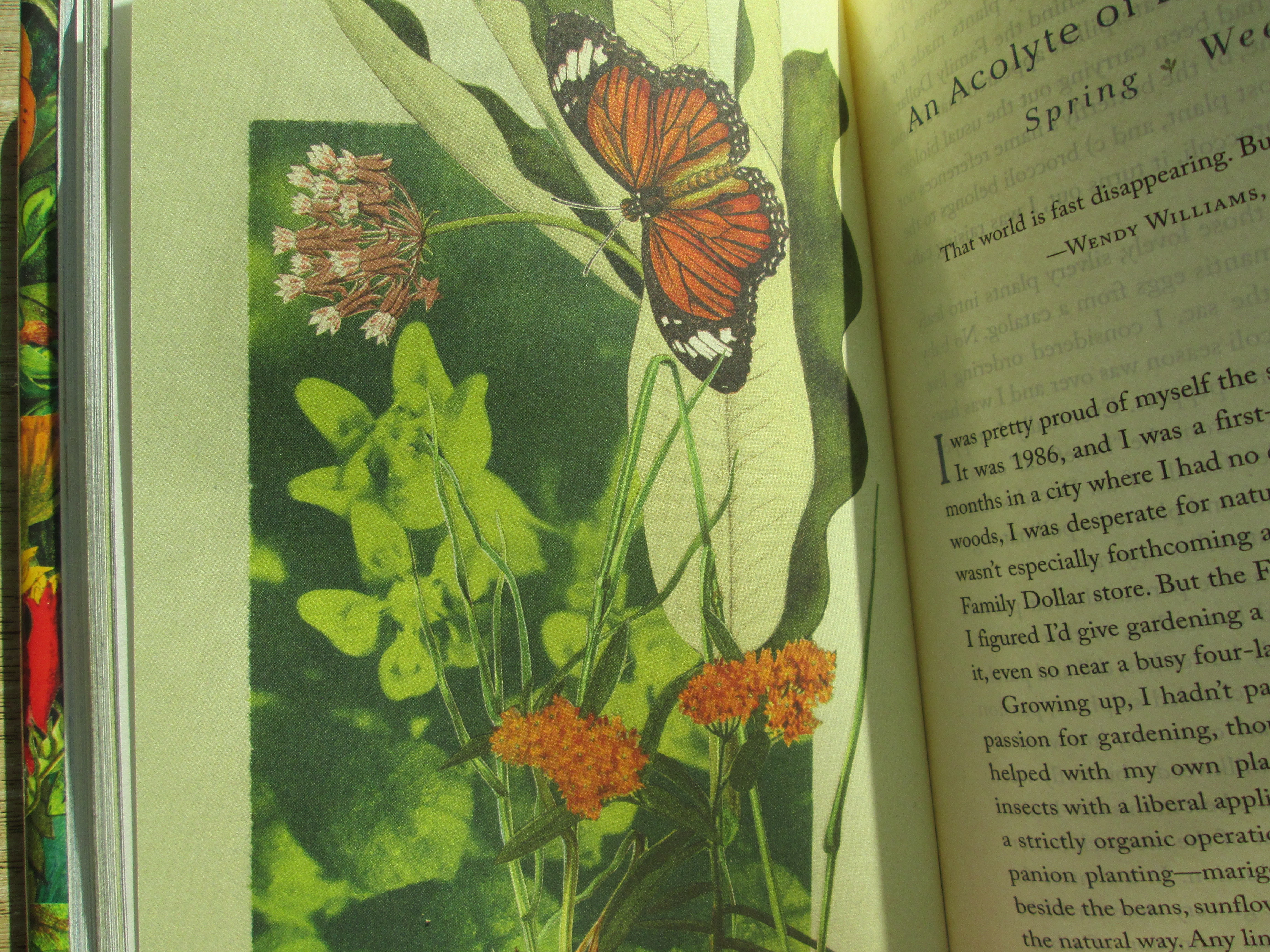
   I have shared some of the delightful artworks included in the book. The artist who created the masterpieces is Billy Renkl, Margaret’s brother.

   I will close this post with a quote by Margaret Renkl, because it summarizes what she tries to communicate in The Comfort of Crows:

     “I rejoice in what is eternal, even as I force myself to face what is not, to let my heart be broken again and again and again. The very least I owe my wild neighbors is a willingness to witness their struggle, to compensate for their losses in every way I can, and to speak on their behalf about all the ways I can’t.”

Here’s a video about the differences between toads and frogs and how you can protect them:

https://www.youtube.com/watch?v=IF0EWfbevrM

 I also invite you to learn about Dr. Tyrone Hayes's story:

 https://www.youtube.com/watch?v=hp-Bvp2oOyQ

 Feel free to share this blog post with your friends. Let’s create ripples of hope and positive changes for the New Year.


 Photo of fox is by Scott Walsh. Source: Unsplash.com


    Relevant links:

https://xerces.org/press/new-report-finds-that-bumble-bees-have-undergone-dramatic-declines

https://hsph.harvard.edu/news/pollination-loss-removes-healthy-foods-from-global-diets-increases-chronic-diseases-causing-excess-deaths/

https://yaleclimateconnections.org/2024/03/we-need-to-talk-about-food-prices/

https://pmc.ncbi.nlm.nih.gov/articles/PMC8803495/

 https://www.beyondpesticides.org

https://www.theguardian.com/environment/2024/dec/26/us-farmers-embracing-wildflowers-prairie-strips-erosion-pollinators


If you enjoyed this blog post, feel free to check my writing on the following books:

 Sweet in Tooth and Claw by Kristin Ohlson

What a Bee Knows by Stephen Buchmann

Hurricane Lizards and Plastic Squid by Thor Hanson

Volcanic Adventures in Tonga by Ann Goth

Addendum: after consulting an expert in amphibians, I learned that my photo shows a Gray Treefrog. (I suspected it could be a kind of frog and I was correct). 


Wednesday, November 1, 2023

Beyond the War on Invasive Species: a Permaculture Approach to Environmental Restoration by Tao Orion


It is not the strongest of the species that survives, nor the most intelligent that survives. It is the one that is the most adaptable to change.”-Charles Darwin

Thousands of animal and plant species are in the process of migrating to adapt to the conditions that climate change imposes on them for their survival. Considering this fact, how can we expect ecosystems to be “unchanged”? We can’t. Ecosystems are dynamic. The concept of “invasive” species becomes a controversial one when one cares to analyze the intricate ways in which everything is connected.

  New species have to adapt to their new surroundings. You are not alone if you have been wondering about the implications of the new situations that arise as a result of climate change and other phenomena. I have noticed how this subject has been conveniently neglected, so I am thankful for Tao Orion’s book.

    Tao Orion explains that non-native species are the symptoms of a complex situation caused by human actions such as logging, mining, emissions of greenhouse gases, unsustainable agriculture, pollution, war conflicts and other human destructive behaviors. The root causes of the presence of invasive species are not even taken into consideration when resorting to the use of herbicides and pesticides with the futile goal of eradicating a species under the delusion that these chemicals will not affect the native ones. (These chemicals may increase the revenue of the manufacturers, but there is no evidence that they support biodiversity, human health and the environment).

 When Tao Orion was employed to restore land in 2010, she was shocked to learn that she was expected to use Round Up for her work. As an organic producer of food, she disagreed with this management. Today we know more about the effects of herbicides and pesticides, and we are continuously learning about the consequences of climate change, so Tao Orion’s book has become more relevant.

  Research on the effects of Glyphosate, for example, continues to emerge. In 2023 research conducted by scientists at UC Berkeley School of Public Health showed that “childhood exposure to the world’s most widely used weedkiller, glyphosate, is linked to liver inflammation and metabolic disorder in early childhood, which could lead to liver cancer, diabetes, and cardiovascular disease later in life.” You can read about it here, and learn more about the researchers’ recommendations.


  While it is necessary and important to foster the growth of native plants, it is also crucial to understand the issues that bring in new species to a place in order to address the root causes of the shift instead of adamantly trying to eradicate a so-called “invasive” species. It is also crucial to understand how new species interact with the environment, because this may help to advocate for strategies that can integrate non-native species into the new environment. For example, pollinators may benefit from flowers that are not considered to be native.

  Even though Tao Orion’s book was published in 2015 and some specific points may be outdated, her approach introduces the science of permaculture to restore ecosystems, and encourages us to apply this knowledge to our daily choices in our own gardens. The book contains a foreword by David Holmgren.

  Tao Orion advocates for methods that consider the relationships in ecosystems, not only those among the living beings in specific habitats but also their interactions with water, air and soil.

 Classifying species into “native” and “invasive” groups is akin to labeling them as the “good” versus the “bad” ones.

We could define nativism as the war against naturalizing species, an ideology that sought to separate nature into good and bad species according to some fixed historical reference.” A paradigm shift is necessary. Ecologist Haikai Tane in New Zealand coined the term “ecosynthesis” to describe the restoration of ecosystem function in the process of combining native and foreign species that colonized abandoned landscapes.


I invite you to read this interview with Tao Orion to learn more:

https://macskamoksha.com/2022/02/beyond-the-war-on-invasive-species-interview-with-tao-orion

  You can also listen to a podcast with Tao Orion at Reseed Canada:

https://www.reseed.ca/listen/remembering-we-are-stewards


 As I type these words, my gaze wanders out the window to embrace the vibrancy of the fall leaves swirling and settling on the ground, creating a composite of hues: ochre, yellow, red and orange. Leaves are an excellent source of nutrition for the soil. Putting them in plastic bags to send them to the landfill is a very poor decision. Leaves are rich in minerals that can support the soil and the development of new plants. People waste money buying mulch when they could simply use the leaves as mulch. The leaves can also be shredded before using them for compost. This link provides some ideas.

 The leaves on the ground also form habitats, establishing new sources of shelter and food for various creatures. There are many worlds of life around us that we often take for granted…


 If you enjoyed this post, feel free to visit my writing on the following books:

Sweet inTooth and Claw: Stories of Generosity and Cooperation in the Natural World by Kristin Ohlson

Deer Man by Geoffroy Delorme

The Wisdom of Wolves by Jim and Jamie Dutcher


Helpful links I encourage you to visit:

https://www.beyondpesticides.org/

https://www.drugwatch.com/roundup/alternatives/

https://www.drugwatch.com/roundup/glyphosate/


Saturday, September 23, 2023

Volcanic Adventures in Tonga by Ann Goth


    In the year 1991 Ann Goth travelled to a volcanic island in Tonga, a tropical place with no running water or electricity. Her purpose was to study an endangered species: the Malau birds. She was only twenty-one years old when she made the decision to settle there for two years with her boyfriend, Ivo, to do their research and protect the species.

 As a conservation enthusiast and a biology student, Ann may have been inspired by other women.  Jane Goodall had traveled to Tanzania to study chimpanzees in the wild thirty-one years earlier; Dian Fossey had flown to Rwanda in 1967 to understand the intricate lives of the mountain gorillas; Birute Galdikas reached one of the wildest places in Indonesian Borneo in 1971, along with her then-husband, Rod Brindamour.

  How did Ann and Ivo manage to get the support they needed to reach such a remote island in the South Pacific? How did they even survive on that island? How did they adapt to the culture of the local people to be able to accomplish their goals? What did they do to tackle the distrust they would face there?

 Patience, curiosity and a love for adventure were the pillars of their determination.

 I was impressed by how sensitive and careful they were in their interactions with the local people. They painstakingly studied their beliefs, conventions and customs to be able to communicate with them and gain their trust and support. They needed their cooperation to protect the Malau birds and to learn about them.


  Volcanic Adventures in Tonga narrates the journey that led her to become an international authority on megapodes. The Malau birds bury their eggs in the warm soil close to a volcano. People in Tonga used to unearth the eggs to eat them. This action contributed to their endangered status back then. Now the birds face new threats…


Ann and Ivo had to adapt to the precarious living conditions and the food the region offered. They lived in a simple hut that had been made by weaving fronds of the coconut palm. This is a vivid account of their experiences, discoveries, disappointments and rewards. 


  Dr. Goth does not even hide the grueling challenges of dealing with one of her supervisors, who had different objectives and threatened to revoke the visa that allowed Ann and Ivo to stay on the island.


  The kingdom of Tonga consists of 171 named islands, but only 36 of them are inhabited. Volcanic Adventures in Tonga reminds us of the deep interconnection and interdependence that exist between the people and their environment. Human beings' coexistence with other species is part of that relationship. 

  I thank Dr. Goth for sharing her book with me for My Writing Life: awareness, reflection, inspiration. Her book won the Literary Titan Book Award.

   Dr. Ann Goth decided to write about her experiences in Tonga thirty years after her stay there, and this is her memoir. The letters she wrote to her mother during that time helped to shape her story, and kudos to her mother for having typed the letters that keep the details of her scientific work and adventures.

 I asked Dr. Goth to answer a few questions about her book for My Writing Life. I appreciate her time, knowledge and enthusiasm.

Julia: Why did you choose the Malau bird to do your research?

Ann: For two reasons. First, because the Malau is endangered and I wanted to help save an endangered bird. Second, because, among the birds, this one is highly unique and special. It is one of the very few birds in the world which does not sit on their eggs to incubate them and instead uses external heat sources for incubation. The Malau uses the volcano for this purpose. And what is even more amazing: the chicks have no contact with their parents and live all by themselves. They are the most precocial chicks in the world. 


Julia: Are you still in touch with people from Tonga? Did you share your book with them?

Ann: For many years, I have been writing letters back and forth with our family on Tin Can Island and the fishermen we worked with. This has ceased after about 10 years.  I have also sent some goods to our adopted family after the terrible volcanic eruption in 2022, and I did, of course, send several copies of my book to both this family and the school on the island. I have not heard back from them yet, but mail in Tonga is slow and this may take quite some months. I am also sharing the news about my book with the Tongan community on various Facebook pages.  


Julia: In your book you mention that people in Tonga are no longer into the habit of digging out eggs, thankfully. Is this a result of greater awareness of the effects of this deleterious action? 

Ann: I do not know the exact reasons but suspect there may be two motives behind this. One is the fact that digging out the eggs is very hard and sweaty work, especially in the humid tropical climate on this island. Younger people may be less inclined to do so. The other fact is that, hopefully, the awareness programs about the plight of the Malau have contributed to a heightened awareness about the negative effect of collecting too many eggs. 


Julia: In what ways is climate change affecting the livelihoods and health of the people in Tonga today? (Feel free to explain how they are dealing with the challenges).

Ann: I have devoted a whole last chapter in my book to this topic, which provides more detail than I can give here. In summary, climate change in the South Pacific does not only mean that islands become flooded and people lose their place to live. It also means that their drinking water gets inundated with salt water and becomes unsafe to consume, that the soil becomes salty and useless for growing crops, and that their lives are at risk from increased disease, cyclones, heatwaves, and droughts. The more frequent cyclones damage the coral reefs where people fish for food and they destroy important crops such as coconuts, bananas and breadfruit. I finish my chapter with a positive note from Will Turner, senior scientist at Conservation International: "We can still make a difference, but we must act now!". 


Feel free to check Dr. Goth's website:


Photographs are courtesy of the author.